 (786) 254-7701
  Location
  Book Now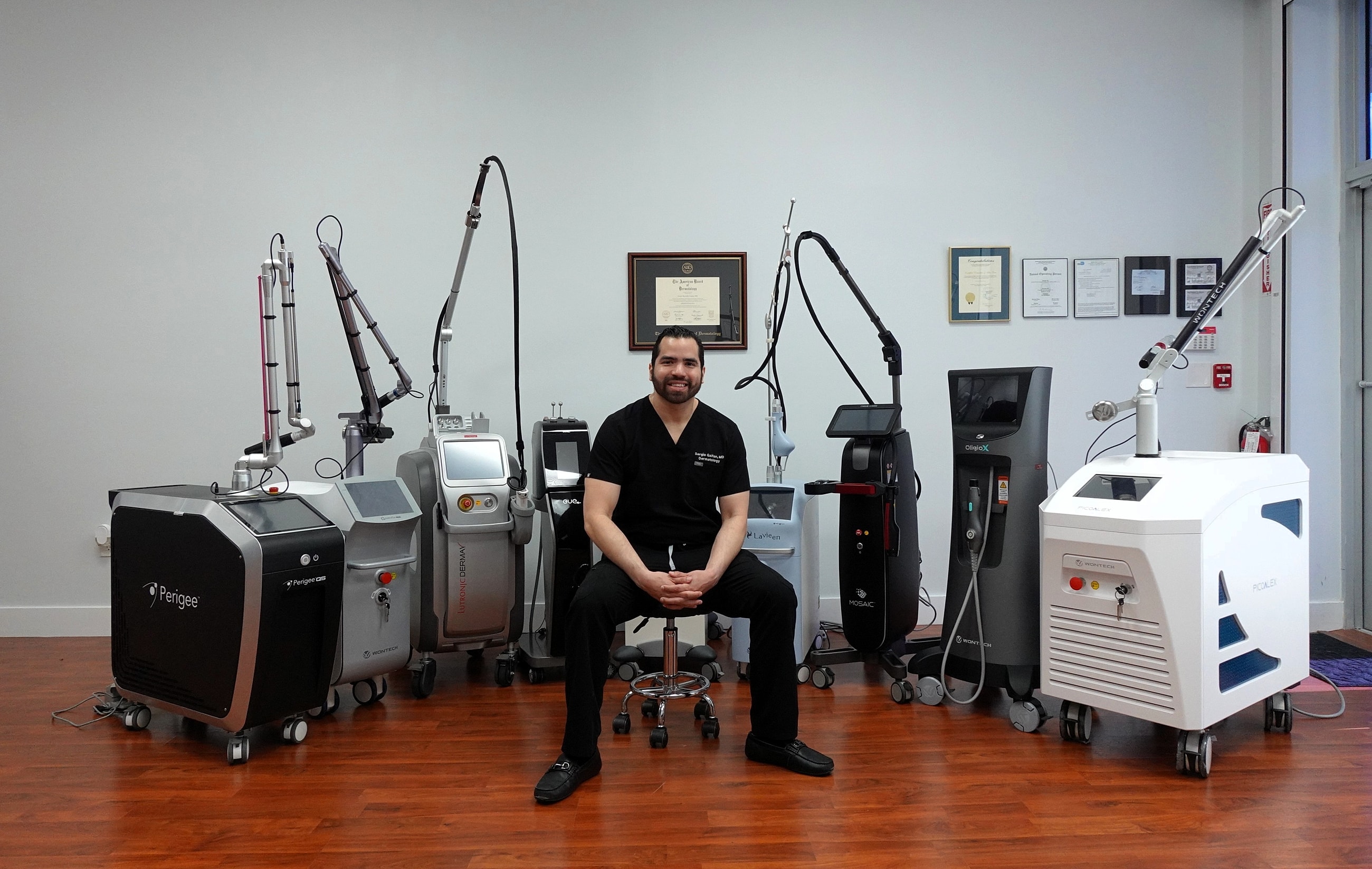
Medically reviewed with expert contribution by Sergio Gaitan, MD, FAAD Board-Certified Dermatologist | Cosmetic Dermatology & Advanced Laser Treatments | Certified Cosmetics Dermatology & Laser | Miami, Florida
What is the best laser for skin resurfacing? Board-certified Miami dermatologist Dr. Sergio Gaitan explains why modern resurfacing may involve combining specialized laser technologies for different skin depths rather than relying on one device to do everything.
Laser resurfacing has evolved significantly. In the past, meaningful improvement in wrinkles, scars and skin texture often required ablative lasers that intentionally removed portions of the skin's surface.
Today, patients have more options. Newer ablative devices aim to reduce heat and downtime, while advanced non-ablative fractional lasers allow dermatologists to target different levels of the skin without relying on the same degree of surface ablation.
However, one key point remains:
A newer ablative laser is still ablative.
Terms such as “cold laser” and “low-downtime resurfacing” can describe meaningful advances in technology, but they do not change whether a treatment is fundamentally ablative or non-ablative.
Sergio Gaitan, MD, FAAD, is a board-certified dermatologist specializing in cosmetic dermatology and advanced laser and energy-based treatments. Before becoming a physician, Dr. Gaitan trained as a chemical engineer, a background that continues to influence how he evaluates laser technology and develops combination treatment protocols.
Dr. Gaitan is a Key Opinion Leader for WONTECH USA, speaker for Cynosure Lutronic, and has been recognized by Newsweek among America's Best Cosmetic Dermatologists. His work with next-generation aesthetic technologies has shaped his approach to what he believes is the next evolution of laser resurfacing:
Instead of asking one laser to treat every layer of the skin, his clinic uses specialized technologies for the depths and concerns they are best suited to treat.
There is no single best laser for every patient.
The appropriate laser depends on what needs to be treated, where that concern exists within the skin, the patient's skin type, medical history and how much recovery is acceptable.
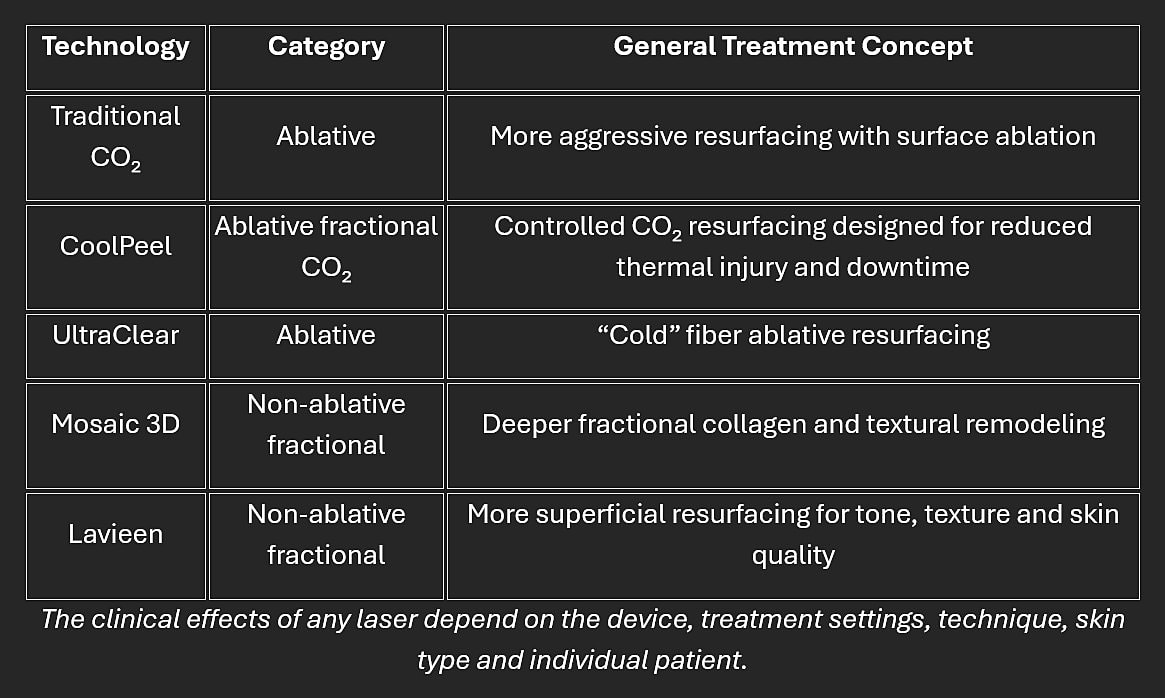
Traditional ablative resurfacing can create significant remodeling by treating the skin from the surface downward. Newer ablative technologies may offer reduced downtime, but they remain ablative.
Dr. Gaitan's alternative approach is multi-depth fractional laser resurfacing.
At Certified Cosmetics, he combines:
Deeper fractional collagen remodeling
More superficial fractional resurfacing
The philosophy is simple:
Different depths. Different wavelengths. Different tools. One individualized treatment strategy.
Laser resurfacing uses controlled laser energy to create a healing and remodeling response in the skin.
But not every resurfacing laser creates that response in the same way.
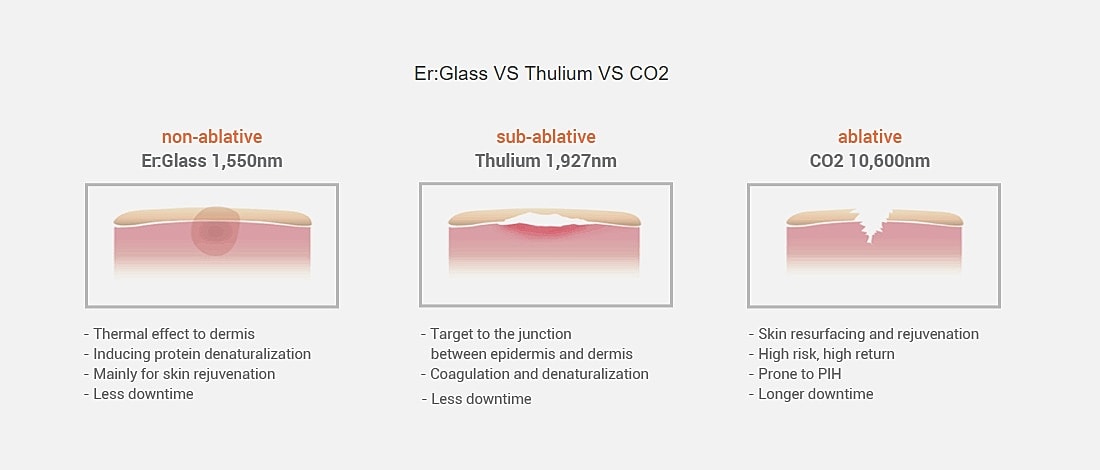
One of the most important distinctions is whether a treatment is ablative or non-ablative.
Ablative lasers intentionally disrupt or remove microscopic portions of the skin's surface.
CO₂ laser resurfacing is one of the most recognized examples.
Depending on treatment depth and settings, ablative resurfacing can produce significant improvement in wrinkles, scars, texture and photodamage.
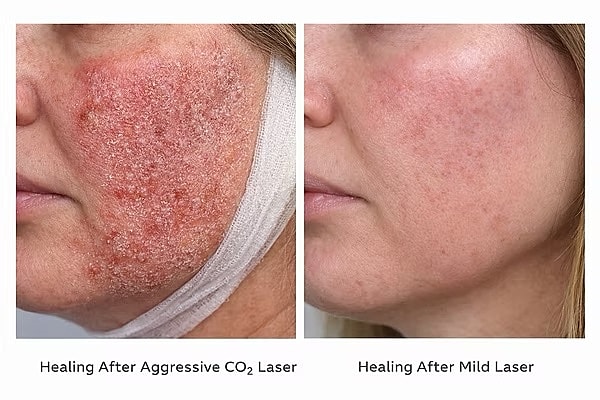
However, because the epidermal barrier is intentionally disrupted, recovery involves wound healing and appropriate post-procedure care.
Non-ablative fractional lasers create controlled microscopic treatment zones without relying on the same type of surface ablation as traditional ablative resurfacing.
The goal is to stimulate collagen and tissue remodeling while preserving more of the skin's protective surface barrier.
This distinction is important:
How a laser interacts with the skin matters as much as the name of the device.
No. A laser described as “cold” can still be an ablative laser.
UltraClear, for example, is a 2910 nm cold ablative fiber laser.
The word “cold” describes characteristics of the technology and energy delivery. It does not mean that the treatment is non-ablative.
This is why Dr. Gaitan recommends looking beyond marketing terminology when comparing resurfacing technologies.
Patients should consider:
Yes. CoolPeel is an ablative fractional CO₂ laser treatment.
CoolPeel represents an advancement in how CO₂ energy can be delivered with less unnecessary thermal injury and a shorter recovery than more aggressive traditional CO₂ resurfacing.
However, reducing downtime does not change the fundamental category of the treatment.
There is also an important tradeoff to understand. A more superficial or less aggressive treatment generally creates less injury and therefore less recovery, but it should not automatically be expected to produce the same degree of remodeling as a deeper treatment.
Less downtime and greater treatment depth are two different goals.
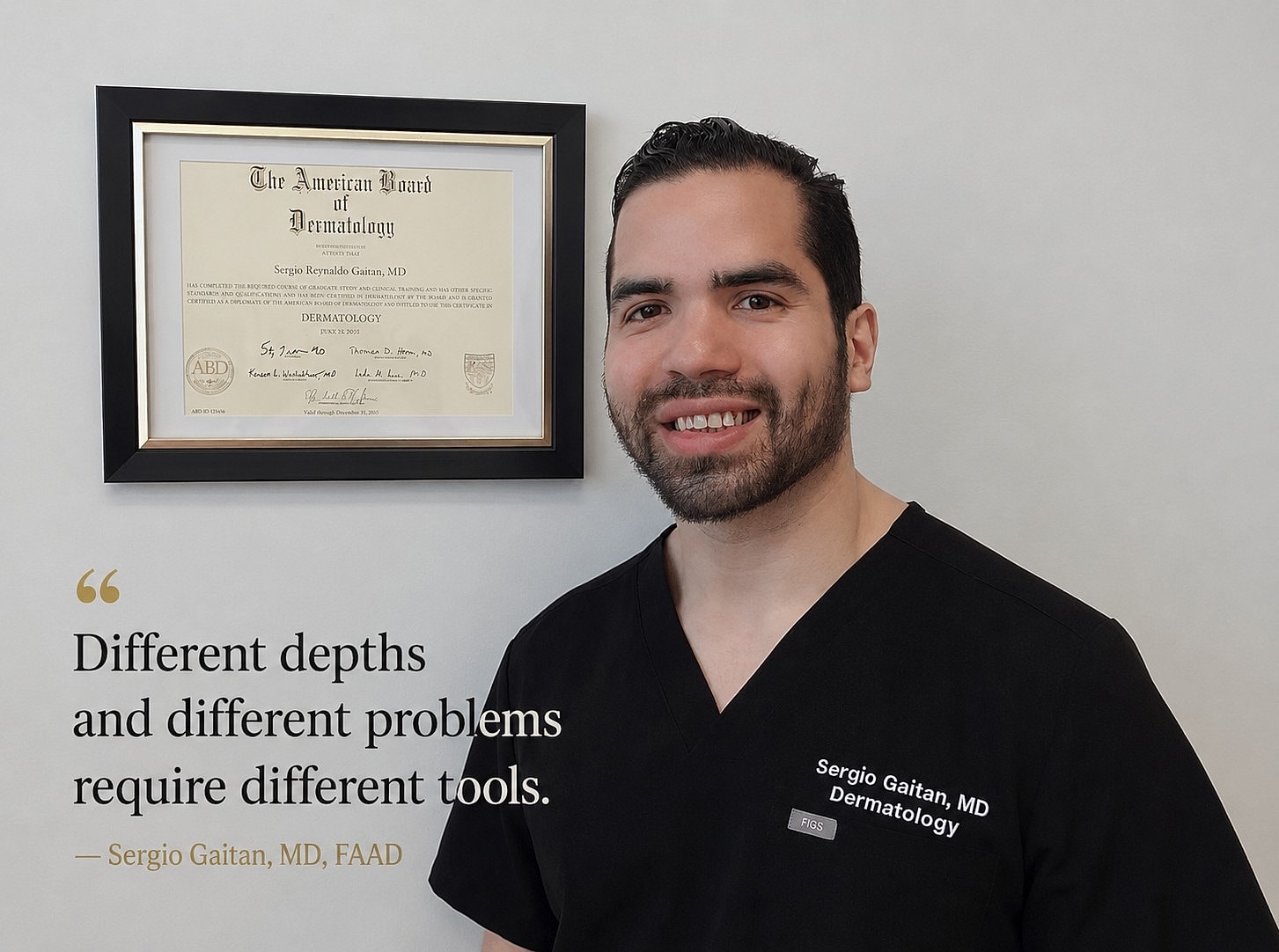
Before becoming a dermatologist, Dr. Sergio Gaitan trained as a chemical engineer.
That background influences how he evaluates laser technology.
Instead of asking:
“What is the strongest laser?”
Dr. Gaitan asks:
“Where is the problem in the skin, and which technology is best suited to treat that depth?”
Wrinkles, acne scars, superficial photodamage, pigmentation and textural changes do not necessarily exist at the same level of the skin.
Historically, resurfacing has often relied on one device to address multiple levels by creating an injury beginning at the surface and extending deeper.
Dr. Gaitan approaches the problem differently. He develops a plan based on the problem and the expected depth. He then combines the appropriate laser technologies to deliver precise results leading to more comfortable treatments with less downtime.
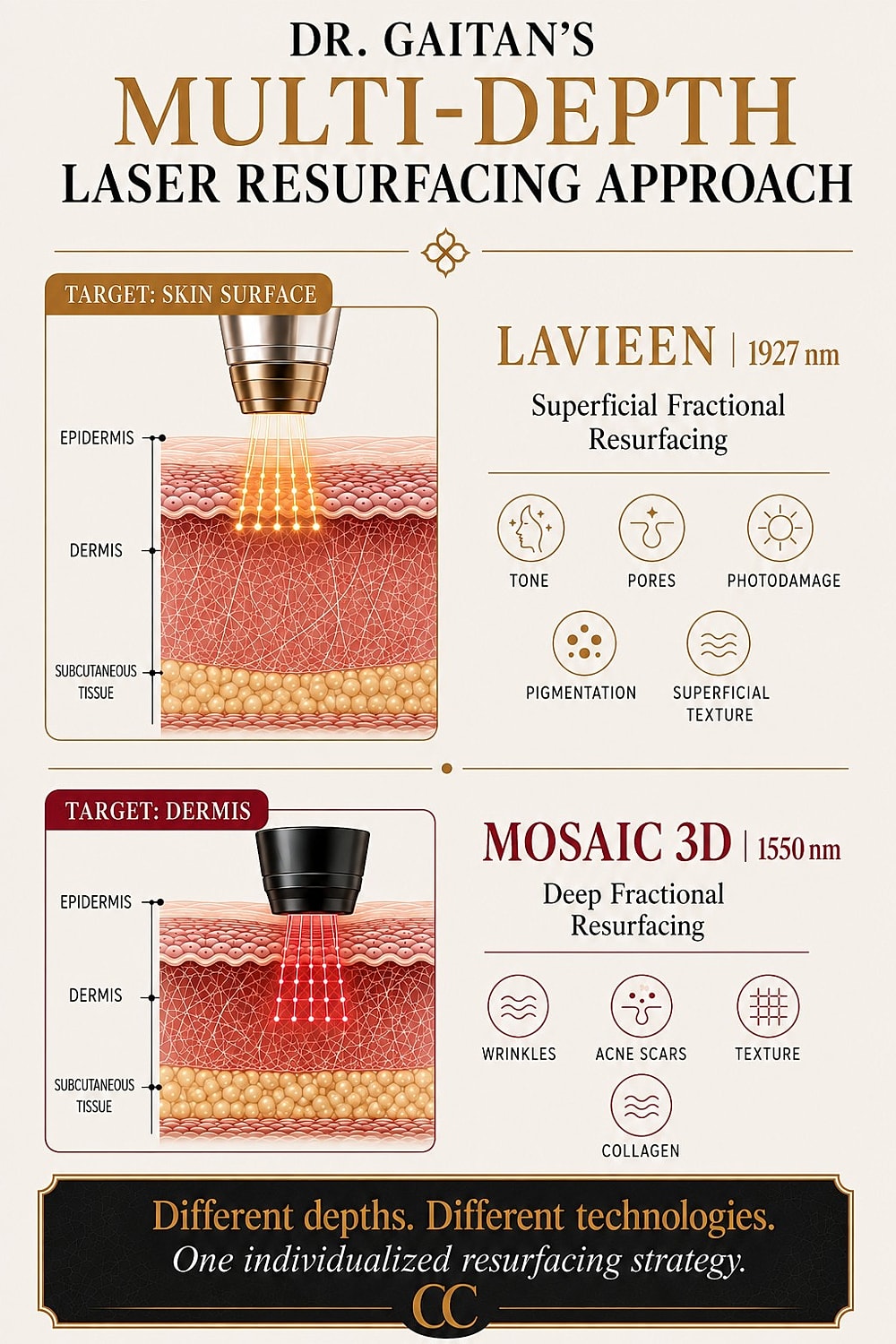
Dr. Gaitan's resurfacing strategy combines Mosaic 3D and Lavieen because each technology performs a different role.
Rather than asking one laser to address every layer, the treatment can be divided according to depth and treatment goal.
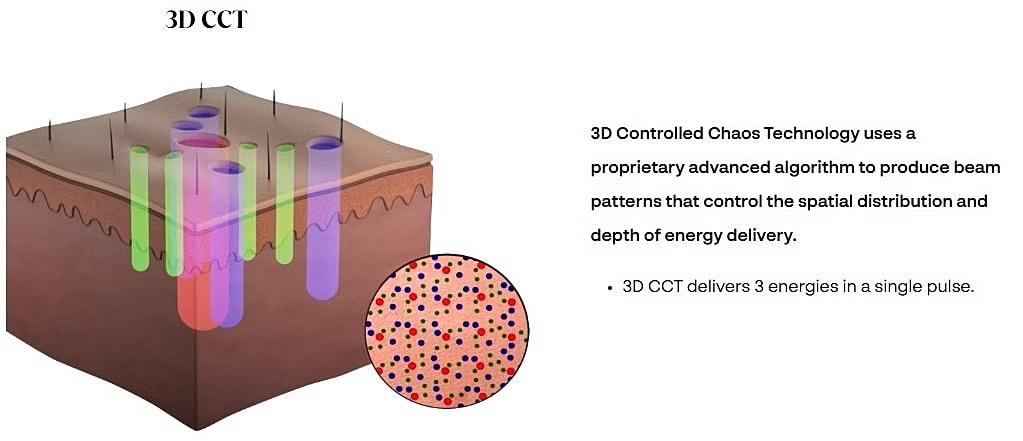
Mosaic 3D is a 1550 nm non-ablative fractional laser.
Dr. Gaitan uses Mosaic 3D when he wants to address deeper concerns such as:
Mosaic 3D allows the deeper component of resurfacing to be treated without requiring an ablative laser to reach that target from the surface downward.
Its 3D fractional technology allows microscopic treatment zones to be distributed at varying depths, supporting Dr. Gaitan's goal of treating deeper structural concerns while preserving the surface differently from ablative resurfacing.
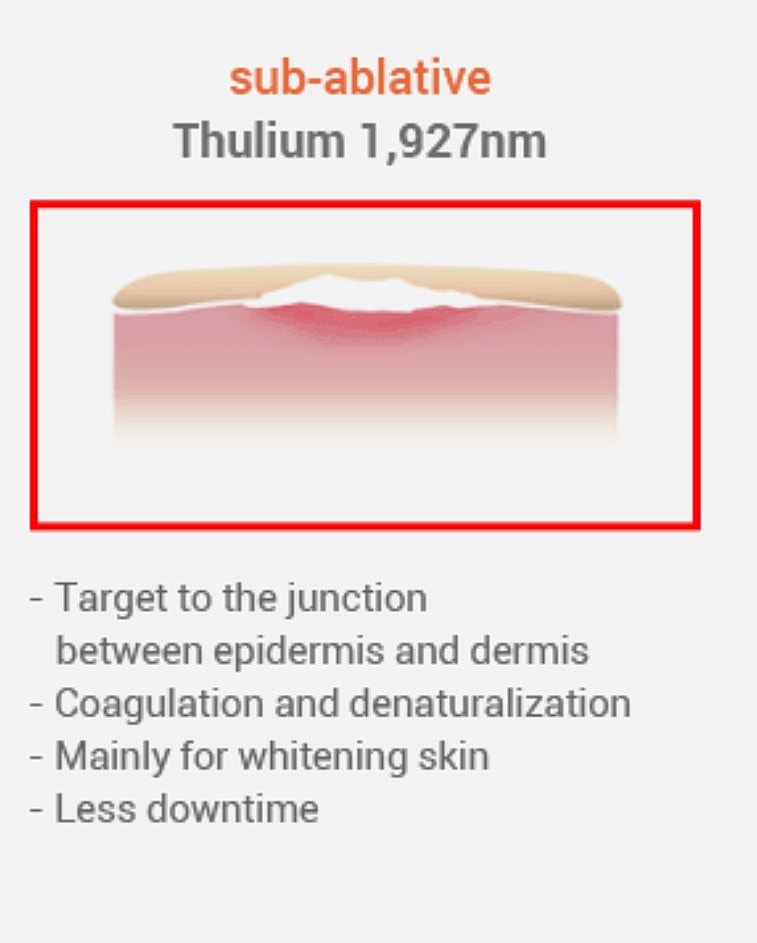
Lavieen is a 1927 nm fractional thulium laser that Dr. Gaitan uses for the more superficial component of resurfacing.
Depending on the patient's skin and treatment settings, Lavieen Laser can address concerns such as:
A key part of Dr. Gaitan's treatment strategy is Lavieen's ability to address the superficial layers while maintaining the stratum corneum intact which differentiates it from traditional ablative resurfacing.
This changes the nature of the surface recovery because treatment does not rely on creating the same type of open surface wound associated with aggressive ablative resurfacing.
Because Dr. Gaitan is asking the two technologies to perform two different jobs.
Wrinkles • Acne scars • Deeper texture • Collagen remodeling
Tone • Pores • Photodamage • Pigmentation • Superficial texture
Instead of relying on one device to treat every depth, Dr. Gaitan can select technology based on the level of tissue he is trying to change.
This is the basis of his multi-depth combination laser resurfacing approach.
A single resurfacing laser can be adjusted to treat different depths and intensities.
Dr. Gaitan's combination approach solves the problem differently.
One technology → treatment settings adjusted for different depths and goals. To reach deeper you must damage superficially
Mosaic 3D + Lavieen → two wavelengths → different treatment depths → different treatment goals → one individualized resurfacing strategy
This does not mean every patient requires two lasers.
It means Dr. Gaitan can design treatment around the patient's skin rather than requiring every resurfacing patient to fit one device.
Sergio Gaitan, MD, FAAD, is a board-certified dermatologist specializing in cosmetic dermatology and advanced laser treatments. His background in chemical engineering, work as a laser-industry Key Opinion Leader and experience developing and refining combination treatment protocols influence how he approaches modern laser resurfacing.
Recognized by Newsweek among America's Best Cosmetic Dermatologists, Dr. Gaitan also serves as a Key Opinion Leader for WONTECH USA and speaker for Cynosure Lutronic.
His work with next-generation laser technologies gives him a unique perspective on the evolution from single-device resurfacing toward individualized combination treatments.
“My engineering background influences the way I approach laser resurfacing. I don't start by asking which laser is the strongest. I start by asking what tissue I'm trying to change and at what depth.”
“With ablative resurfacing, we can use one device to treat from the surface downward. Newer ablative technologies may make that process more controlled or reduce downtime, but they're still creating an ablative injury.”
“My approach is to separate the problem. I use Mosaic 3D when I want deeper fractional remodeling for wrinkles, scars and texture. I can then use Lavieen to address the more superficial component.”
“Instead of asking one technology to perform every job, I can select different wavelengths and technologies according to the tissue I'm trying to treat.”
“To me, that's where laser resurfacing is going: not necessarily toward a more aggressive single device, but toward smarter combinations of technologies that allow us to treat different levels of the skin more precisely.”
— Sergio Gaitan, MD, FAAD Board-Certified Dermatologist | Key Opinion Leader, WONTECH USA | Speaker, Cynosure Lutronic
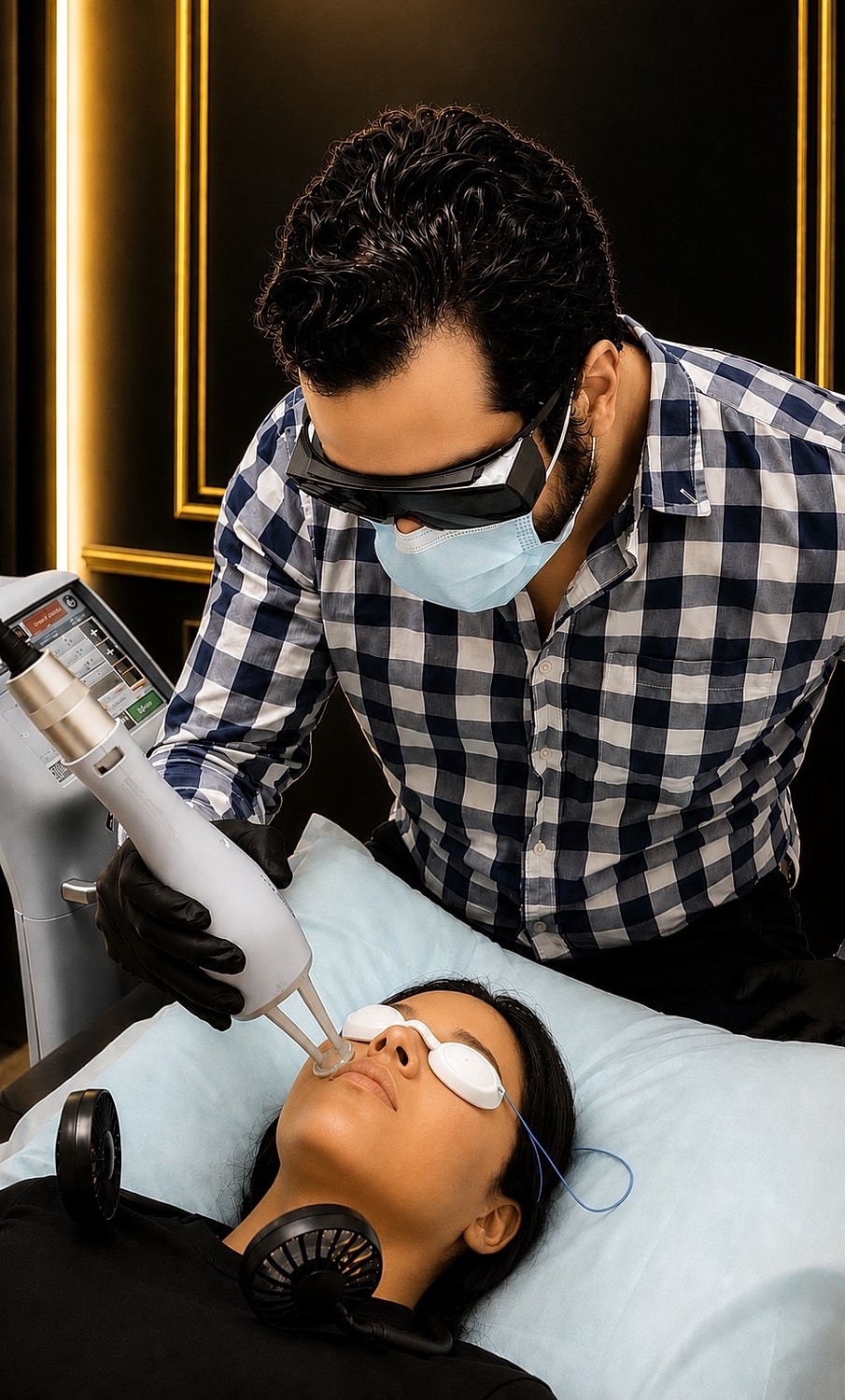
No. Ablative lasers remain important and effective resurfacing tools for appropriately selected patients.
Aggressive ablative resurfacing may be appropriate when substantial resurfacing is desired and the patient is willing to accept the associated recovery and wound care.
The question is not whether one technology is universally better.
A more useful question is:
What result are we trying to achieve, at what depth, and what recovery profile is appropriate for this patient?
For some patients, ablative resurfacing may be appropriate. For others, a multi-depth fractional approach may better align with their skin, goals and tolerance for recovery.
For instance, I still think of ablative resurfacing as first line in someone who is fair skin and has either severe sun damage or deep acne scars and is willing to accept the downtime and risk.
Non-ablative does not mean no recovery.
Depending on the treatment, patients may experience:
The difference is that non-ablative resurfacing does not depend on the same type of surface ablation as traditional aggressive ablative resurfacing.
Preserving more of the surface barrier changes the nature of post-treatment recovery .
As well as the newer generation non-ablative resurfacing lasers are faster and have better cooling allowing for even less swelling than previous generation devicies.
Modern laser resurfacing is moving beyond the idea that one device must address every layer and every skin concern.
Newer strategies can combine fractional technologies with different wavelengths and treatment depths.
Dr. Sergio Gaitan's approach at Certified Cosmetics combines Mosaic 3D for deeper fractional remodeling with Lavieen for more superficial resurfacing when clinically appropriate, allowing each technology to perform a specialized role.
Yes. UltraClear is an ablative laser even though it is described as a “cold” laser.
UltraClear uses 2910 nm cold fiber laser technology. “Cold” describes characteristics of the technology; it does not mean non-ablative.
CoolPeel is an ablative fractional CO₂ laser treatment.
It is designed to deliver CO₂ energy in a controlled manner with less unnecessary thermal injury and downtime than more aggressive traditional CO₂ resurfacing.
Shorter downtime does not make a laser non-ablative.
No. Mosaic 3D is a 1550 nm non-ablative fractional laser.
Dr. Gaitan uses Mosaic 3D for the deeper component of his combination resurfacing protocol, including collagen remodeling, wrinkles, acne scars and deeper textural concerns.
Lavieen is a 1927 nm fractional thulium laser used for superficial skin resurfacing and rejuvenation.
Dr. Gaitan incorporates Lavieen to address concerns including tone, photodamage, pores, pigmentation and superficial texture.
Dr. Sergio Gaitan combines laser technologies because different wavelengths can be selected for different depths and treatment goals.
Mosaic 3D is used for deeper fractional remodeling while Lavieen addresses the more superficial component.
This allows Dr. Gaitan to design a layer-by-layer resurfacing strategy rather than relying on a single wavelength or device to accomplish every treatment goal.
A stronger laser is not automatically a better laser treatment.
Increasing treatment intensity can also increase tissue injury and recovery.
Dr. Gaitan's philosophy is to determine where the concern exists within the skin and then select an appropriate technology for that depth.
The objective is not maximum intensity. The objective is appropriate treatment at the appropriate depth.
Yes. Non-ablative does not mean no downtime.
Patients can experience redness, swelling, dryness, roughness, bronzing or flaking following fractional laser resurfacing. However with the newer technologies downtime is typically less than with previous generation devices because they have advanced cooling and are more customizable.
Ablative resurfacing disrupts the skin's protective surface barrier, so appropriate wound care is part of the healing process.
The amount of recovery depends on treatment depth, density, settings and the specific technology.
This is why “low downtime” should not automatically be interpreted as “non-ablative.”
The best laser depends on the depth and type of the skin concern.
For deeper wrinkles, texture and collagen remodeling, Dr. Gaitan may incorporate Mosaic 3D. For more superficial texture, tone and photodamage, he may incorporate Lavieen.
When concerns exist at multiple levels, he may combine technologies rather than requiring one laser to address every depth.
Sergio Gaitan, MD, FAAD, is a board-certified dermatologist in Miami specializing in cosmetic dermatology and advanced laser and energy-based treatments.
Before becoming a physician, Dr. Gaitan studied chemical engineering at the University of Florida. He currently serves as a Key Opinion Leader for WONTECH USA and speaker for Cynosure Lutronic and has been recognized by Newsweek among America's Best Cosmetic Dermatologists.
At Certified Cosmetics Dermatology & Laser, Dr. Gaitan's work focuses heavily on advanced laser treatments and individualized combination protocols designed around different skin concerns and treatment depths.
No. There is no single laser that is best for every patient, skin type or skin concern.
Dr. Gaitan evaluates factors including skin type, pigmentation, wrinkles, scarring, texture, photodamage, history of melasma, previous procedures, medical history and tolerance for downtime.
His approach can be summarized simply:
Identify the problem. Determine the depth. Then choose the technology.
At Certified Cosmetics Dermatology & Laser in Miami, board-certified dermatologist Sergio Gaitan, MD, FAAD, uses advanced laser technologies and combination protocols to individualize resurfacing according to the patient's skin rather than following a one-device-fits-all model.
His multi-depth approach combines Mosaic 3D for deeper fractional remodeling with Lavieen for more superficial resurfacing when clinically appropriate.
Not every patient requires both lasers, and not every patient is a candidate for the same resurfacing approach.
The appropriate treatment begins with an evaluation of the patient's skin, concerns, medical history and goals.
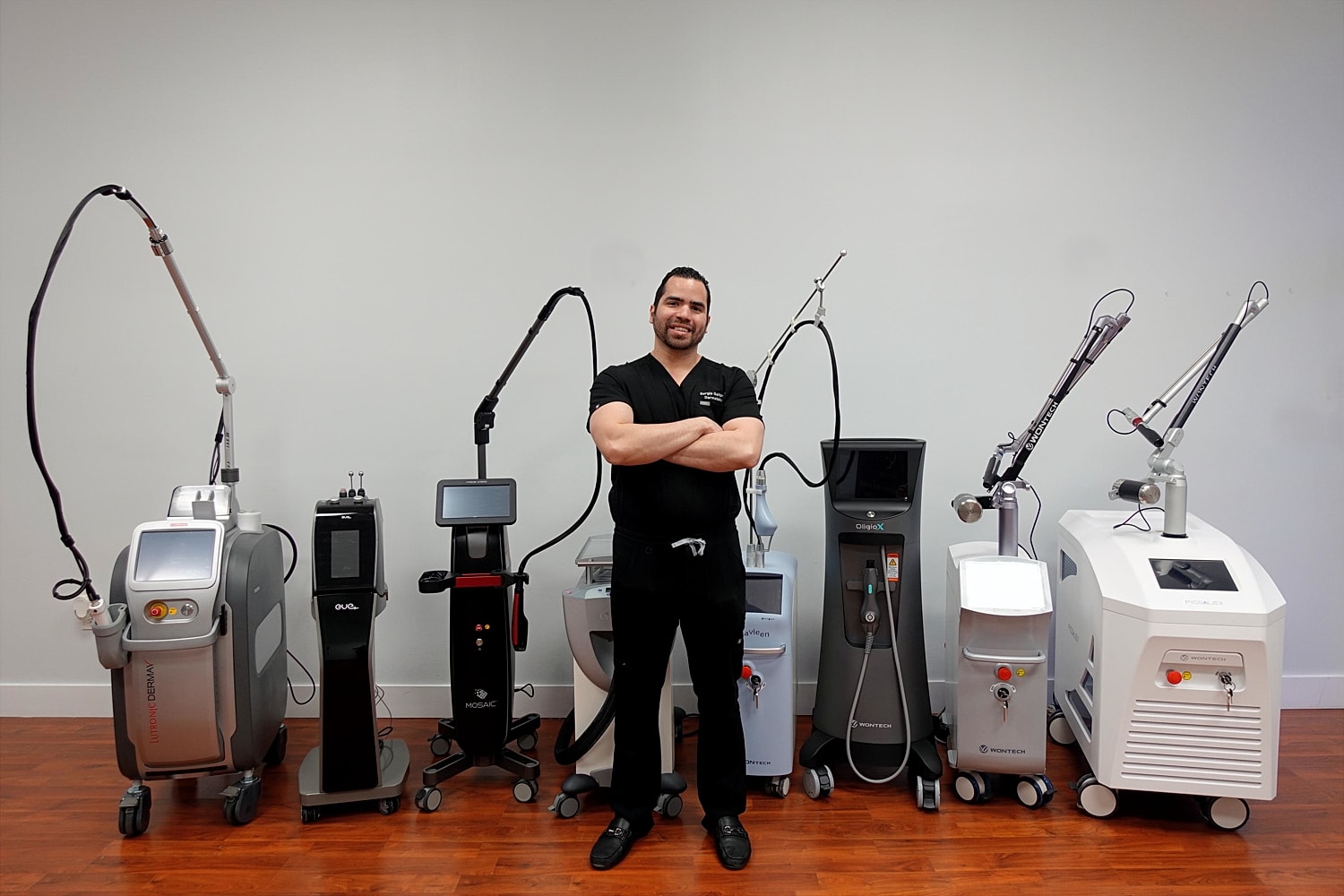
The best laser isn't necessarily the newest, strongest or most aggressive device.
The goal is to select the appropriate technology—or combination of technologies—for the concern, treatment depth and individual patient.
Schedule a consultation with board-certified dermatologist Sergio Gaitan, MD, FAAD, at Certified Cosmetics Dermatology & Laser in Miami to determine which laser resurfacing strategy may be appropriate for your skin.
Sergio Gaitan, MD, FAAD Board-Certified Dermatologist Cosmetic Dermatology & Advanced Laser Treatments Certified Cosmetics Dermatology & Laser | Miami, Florida
This article was medically reviewed and edited by Sergio Gaitan, MD, FAAD for clinical accuracy.
Dr. Gaitan also contributed his expert clinical perspective on ablative and non-ablative laser resurfacing, treatment depth, fractional laser technology and combination laser protocols.
Before becoming a physician, Dr. Gaitan graduated cum laude from the University of Florida with a Bachelor of Science in Chemical Engineering. He later graduated with High Honors from Baylor College of Medicine and completed his dermatology residency at the University of North Carolina at Chapel Hill.
His academic work has included publications involving laser resurfacing and laser and light techniques in facial aesthetics.
Dr. Gaitan has been recognized by Newsweek among America's Best Cosmetic Dermatologists and currently serves as a Key Opinion Leader for WONTECH USA and speaker for Cynosure Lutronic.
His work at Certified Cosmetics focuses on advanced laser and energy-based treatments and the development and refinement of individualized combination treatment protocols.
Last medically reviewed: August 2026
This article is intended for general educational purposes only and does not replace an individualized consultation, diagnosis or treatment plan with a qualified healthcare professional.
Laser selection, treatment settings, expected results, risks and recovery vary based on skin type, pigmentation, medical history, treatment area, individual goals and other clinical factors. A medical evaluation is necessary to determine whether a particular laser treatment or combination protocol is appropriate for an individual patient.