 Call Us
  Location
  Book Now
  Text Us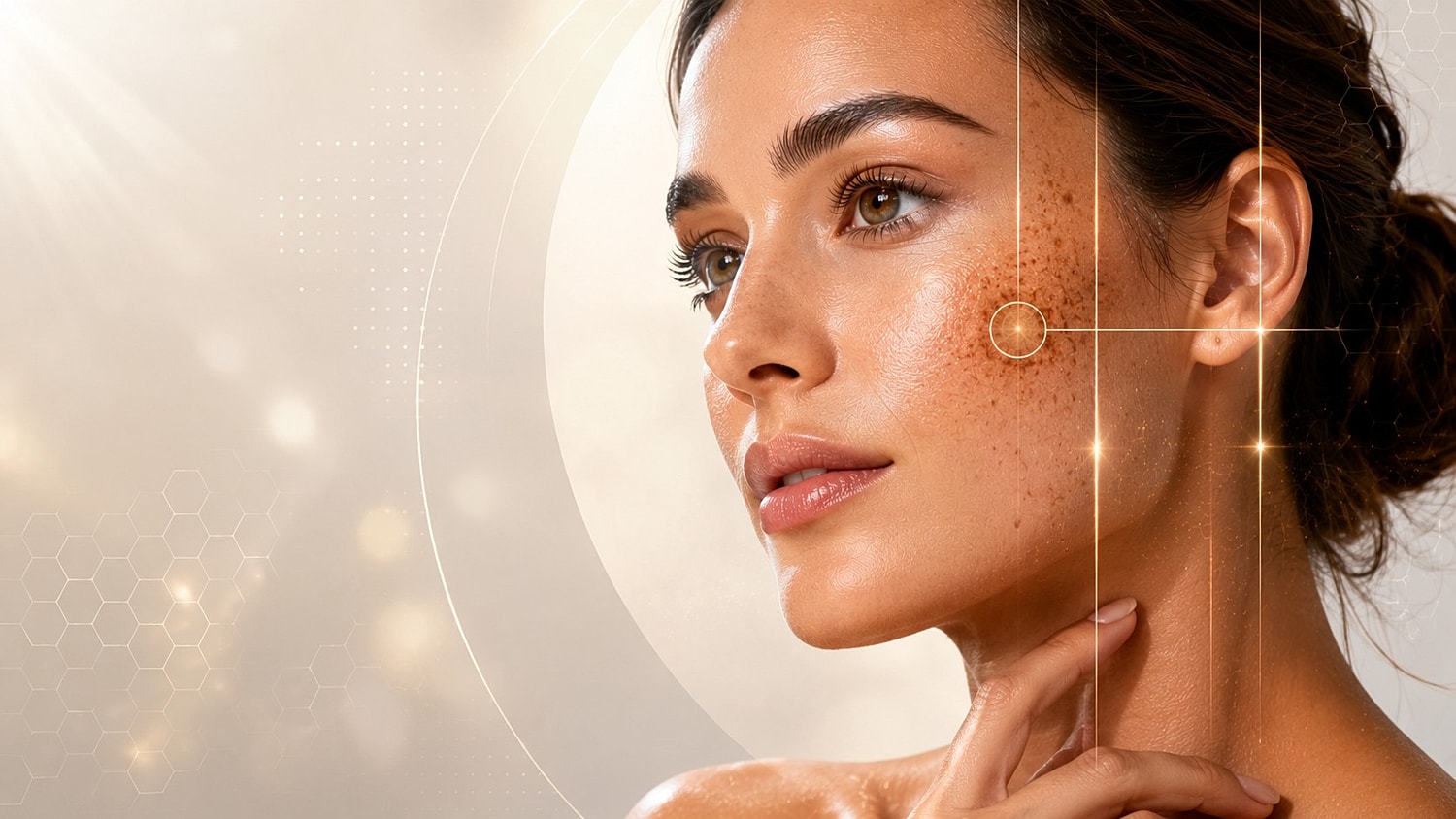
What You Need to Know About IPL vs. Laser
Medically reviewed with expert contribution by Sergio Gaitan, MD, FAAD:
Cosmetic Dermatology & Advanced Laser Treatments | Certified Cosmetics Dermatology & Laser | Miami, Florida

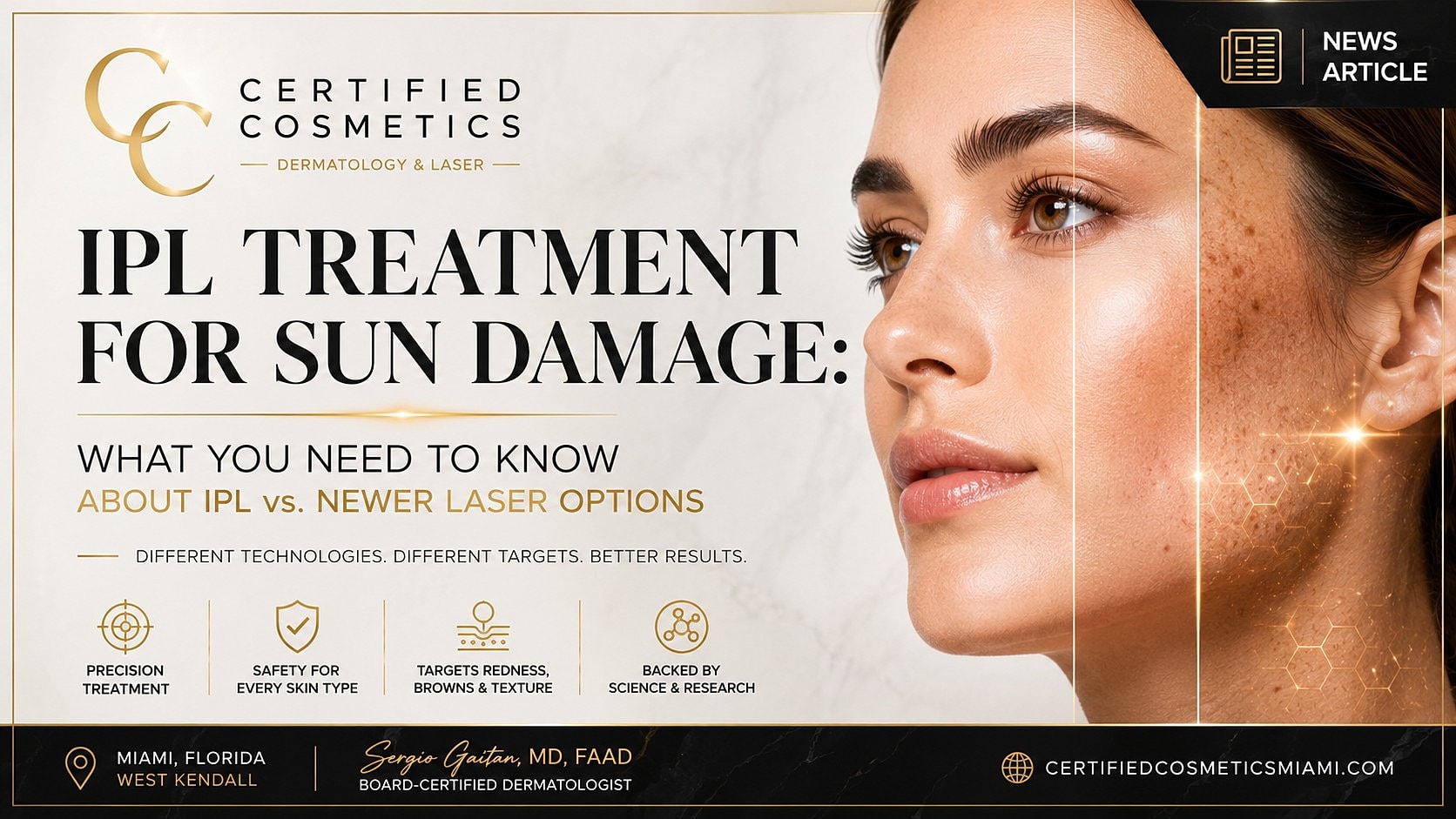
If you are researching IPL treatment for sun damage because of sun spots, redness, and uneven tone, it helps to know that IPL is intense pulsed light, not a true laser. IPL photofacials use broad spectrum light to address mixed red and brown discoloration, while modern lasers use a single, precise wavelength selected for a specific target in the skin. At Certified Cosmetics in Miami, every plan for photodamage starts with a board-certified dermatologist evaluating your skin type, pattern of sun exposure in Miami, and concerns before recommending treatment such as vascular laser, pico laser, fractional laser resurfacing, or a combination. The goal is to match each technology to the color, depth, and biology of your sun damage so treatment is as focused and efficient as possible.
Living in Miami means year round sunshine, outdoor sports, and reflected light from water and pavement, all of which can accelerate photodamage on the face, neck, chest, and hands. Instead of relying on a single device for every patient, Certified Cosmetics uses a multi laser and energy-based approach guided by the guiding idea Different wavelengths. Different depths. Different targets. This lets Dr. Sergio Gaitan design treatments that respect your skin tone and lifestyle while aiming to improve visible sun spots, redness, and texture in a thoughtful, evidence based way.
IPL (intense pulsed light) delivers broad spectrum flashes of light that are filtered into bands, which can be helpful when selected patients have both reds and browns in the same area. A true laser, by contrast, emits a single, specific wavelength chosen to interact with a particular target such as melanin or hemoglobin at a defined depth in the skin. This is why dermatologists often say Different wavelengths. Different depths. Different targets. because the physics behind each device influences which component of sun damage it can treat most efficiently.
In practice, IPL photofacial treatments can be a reasonable choice for lighter skin types with mixed sun spots and background redness, as long as expectations and safety parameters are clear. In other cases, a dermatologist may instead choose a vascular laser to focus on visible vessels, a pigment specific laser for discrete brown spots, or fractional resurfacing to address texture and fine lines. At Certified Cosmetics we currently don't use IPL because we have access to advanced lasers to deliver more precise energy that is more comfortable and effective. This allows our treatments to be customized to any skin type, diagnosis, and downtime preferences.

This simplified comparison highlights how IPL and wavelength specific lasers behave differently when treating photodamage. It is not a substitute for a full exam, but it can help you understand why a dermatologist might recommend one approach over another based on your skin type, pattern of sun exposure, and whether brown spots, redness, or texture are your main concern.
IPL uses intense broad spectrum light pulses that are filtered but still contain multiple wavelengths in each flash. Lasers use a single, coherent wavelength that can be directed very precisely into the skin, which allows the provider to adjust parameters such as fluence, pulse duration, and spot size for a particular target.
Because IPL is broad spectrum, it can interact with several chromophores at once, which may be useful when red and brown changes overlap but also limits selectivity. A laser’s narrow spectrum can be matched to melanin, hemoglobin, or water, giving the dermatologist more control over how light is absorbed and how deep it travels.
IPL often helps lighten mottled brown sunspots in fairer skin, especially when there is background discoloration. Pigment specific lasers, such as pico lasers, allow the provider to target melanin more directly, which can be important for discrete spots or complex pigment patterns and for tailoring treatment to different skin tones.
IPL photofacials can reduce diffuse redness and some superficial vessels, but control over vessel size and depth is limited. Vascular lasers like KTP/ND:Yag systems allow the provider to choose wavelength and pulse structure to better match vessel diameter, depth, and hemoglobin absorption, which can be especially helpful for rosacea, broken capillaries, and sun related flushing.
IPL carries higher risk of burns and post inflammatory hyperpigmentation in darker skin types or tanned skin because broad spectrum light can be absorbed by background epidermal melanin. Lasers with appropriate wavelengths, cooling, and conservative settings can often be used more selectively in a wider range of skin types, although all energy based treatments still require careful evaluation and parameter choices.
IPL energy primarily targets more superficial chromophores and does not create controlled columns of injury at specific depths. Fractional lasers at wavelengths such as 1927 nm and 1550 nm create microscopic treatment zones that reach defined levels within the epidermis and dermis, which allows dermatologists to treat superficial mottling, deeper photoaging, and collagen remodeling at different depths.
IPL is not a resurfacing technology and does not create fractional columns of thermal change in the same way as nonablative fractional lasers. Fractional lasers are studied for improving skin texture, fine lines, and some acne scars in addition to pigment changes, because they stimulate new collagen and structural remodeling in the treated areas.
With IPL, customization is mainly through fluence, filters, and pulse patterns within the limits of broad spectrum light. With lasers, dermatologists can switch among devices and wavelengths, stacking pigment, vascular, and fractional treatments over time or in combination protocols. This multi laser strategy is particularly helpful in Miami patients who present with a mix of sun spots, redness, and texture changes from years of UV exposure.
Many patients ask whether laser is stronger than IPL, but strength is not the most useful way to compare these technologies. A laser can be more selective because it delivers a specific wavelength that is chosen to interact with a defined target (eg. redness, pigment) at a certain depth, and the energy, pulse duration, and pattern can all be adjusted. The safest and most effective treatment is not always the one that is most aggressive, but the one whose wavelength and parameters best match your individual sun damage.
Sun damage itself is multi layered. It can show up as brown sun spots, uneven tone, redness, visible vessels, fine lines, rough texture, collagen loss, and actinic changes from chronic UV exposure. For one patient, a pigment targeting laser may be the priority, while another may benefit more from a vascular laser or fractional resurfacing. Sometimes IPL is chosen when mixed superficial reds and browns dominate in the right skin type. At Certified Cosmetics, Dr. Gaitan reframes the question from “Which device is stronger?” to “Which of our advanced technology best match the type and depth of this person’s sun damage?”
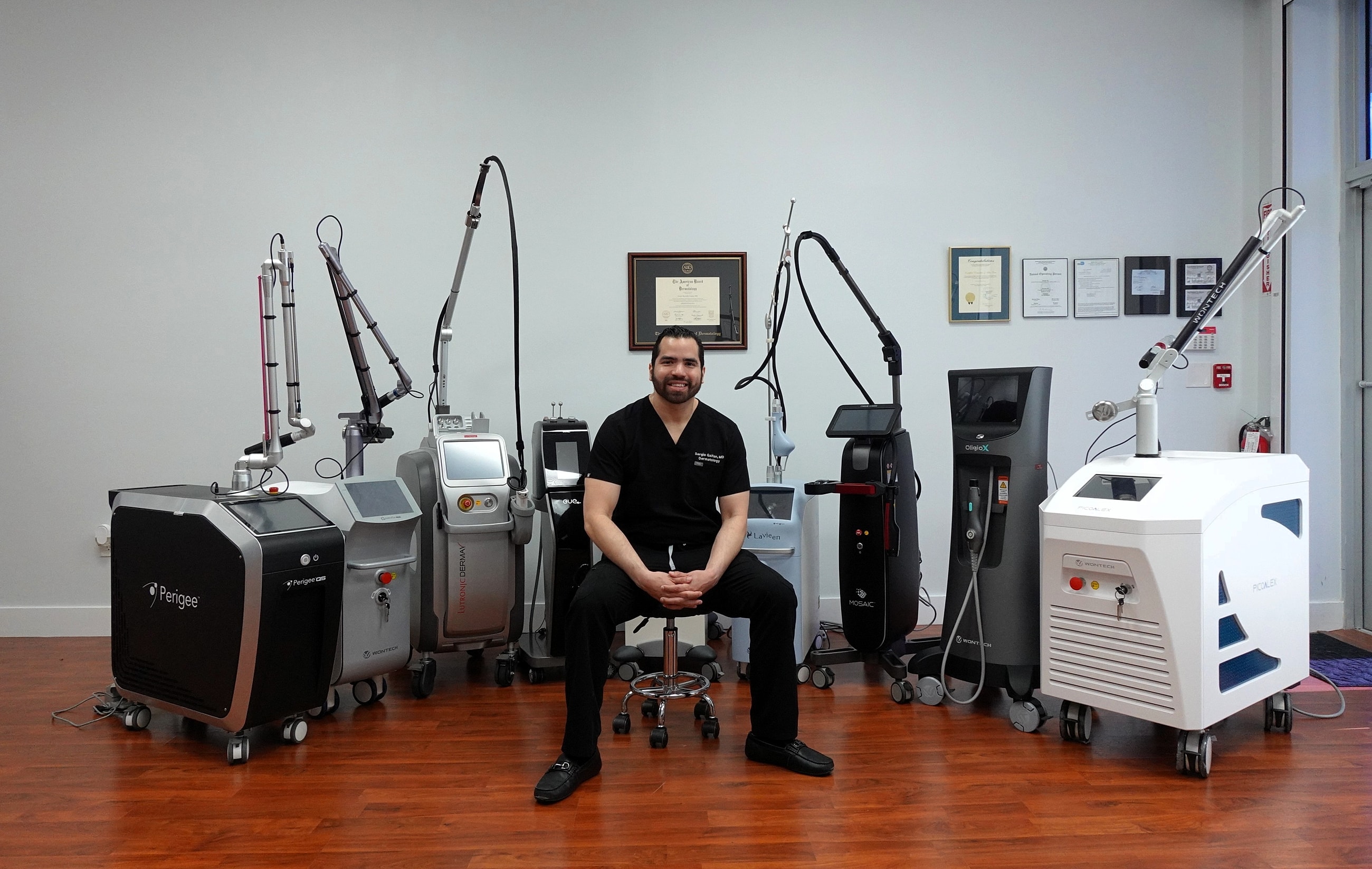
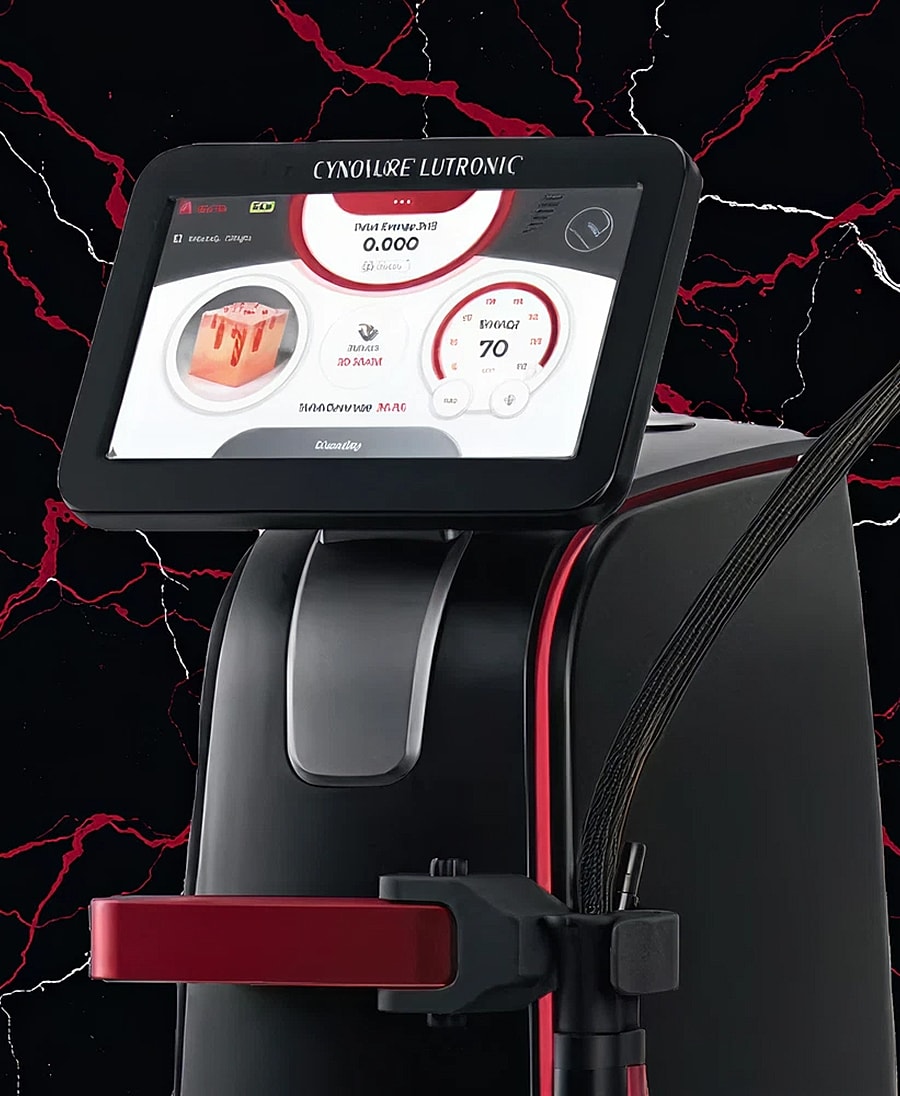
DermaV is a dual wavelength KTP vascular laser that uses advanced cooling and real time temperature sensing to target blood vessels associated with redness, rosacea, broken capillaries, and certain vascular lesions. By choosing wavelength, pulse structure, and spot size, Dr. Gaitan can focus light energy on hemoglobin within vessels while helping to protect surrounding tissue. In selected lighter skin types, DermaV can also address specific brown lesions when parameters and diagnosis are appropriate.
Where an IPL photofacial uses broad spectrum light to address reds and browns together, DermaV offers a more wavelength specific approach for patients whose main concern is persistent redness, flushing, or sun related vessels, especially in a climate like Miami where heat can trigger symptoms. The ability to tune treatment to the size and depth of vessels supports more customized care, but DermaV is not the only tool used at Certified Cosmetics. It is one example of how a multi laser strategy can focus on particular components of sun damage rather than asking a single broad spectrum device to do everything. Derma V is often combined with fractional laser resurfacing to address sun damage at multiple levels.

Treating sun damage in darker skin types requires additional care because there is more baseline epidermal melanin that can absorb light energy. When IPL or lasers are used without appropriate settings or patient selection, the risk of burns and post inflammatory hyperpigmentation increases. This is why IPL is not automatically the right choice for every skin tone, and why a thorough dermatologic evaluation, including history of pigmentation problems, medications, and recent sun exposure, is essential before any light-based treatment.
At Certified Cosmetics, PicoAlex, a 755 nm picosecond alexandrite laser, is one of the pigment focused technologies that is used for certain brown sun spots or uneven tone in carefully selected patients. This wavelength targets melanin using ultra short photoacoustic pulses rather than primarily heat-based injury. At Certified Cosmetics Dr. Gaitan assesses pigment depth, pattern, and skin type to decide which treatment is best for your concern.

Nonablative 1927 nm thulium fractional lasers create microscopic treatment zones within the more superficial layers of the skin, allowing dermatologists to treat larger “fields” of photodamage rather than only individual sun spots. Because this wavelength is strongly absorbed by water in the epidermis, it is especially useful for diffuse mottled pigmentation, uneven tone, and early texture changes related to chronic sun exposure. Lavieen at Certified Cosmetics uses this 1927 nm wavelength to address superficial photodamage as part of a broader resurfacing strategy.
Peer reviewed research on 1927 nm fractional thulium technology has shown improvements in clinical scores of photodamage, actinic lentigines, and overall skin quality after a series of treatments. Other studies have evaluated this wavelength for actinic keratoses and chronically sun damaged skin, reporting reductions in lesion counts and histologic changes in treated fields. These studies investigate the 1927 nm wavelength class and do not all use the same brand of device, and they do not replace sunscreen, regular skin exams, biopsies, or standard treatments for actinic keratoses and skin cancer. Instead, they suggest that fractional 1927 nm treatments can be one useful tool for managing superficial components of sun damage in appropriately selected patients.
Nonablative 1550 nm fractional lasers work at a deeper level than 1927 nm, creating columns of controlled thermal injury that extend into the dermis where collagen and elastin live. This pattern of microscopic treatment zones surrounded by healthy tissue stimulates a wound healing response that can improve fine lines, rough texture, and deeper signs of photoaging over time. Mosaic 3D at Certified Cosmetics is a 1550 nm based platform used as part of a next generation laser resurfacing approach.
Clinical studies of 1550 nm fractional technology have documented improvements in photodamage, dyspigmentation, and dermal remodeling, and some research has evaluated protocols that combine approximately 1550 nm and 1927 nm wavelengths in the same treatment series. In those combination approaches, the more superficial 1927 nm wavelength focuses on mottled pigment and early epidermal change, while the 1550 nm wavelength targets deeper textural and collagen related photoaging. For many patients, especially in sun intensive environments, this layered strategy can address different depths of sun damage more comprehensively than a single IPL photofacial alone.
Sun damage is more than what we see as brown spots and redness on the surface. Years of ultraviolet exposure affect how skin cells function, how collagen is organized, and even how genes related to aging and repair are regulated through chemical markers such as DNA methylation. Modern laser research is increasingly interested in whether fractional resurfacing may influence not only the appearance of photodamage but also some of these deeper biological changes in chronically sun exposed skin.
Randomized clinical studies of fractional laser resurfacing in fields with actinic keratoses have reported both cosmetic improvement and sustained reductions in actinic keratosis counts, along with fewer nonmelanoma skin cancers in treated areas compared with untreated control sites over certain follow up periods. These findings have generated significant interest in the potential biological effects of fractional resurfacing on actinically damaged skin, but they do not mean that laser treatment prevents skin cancer or replaces sunscreen, routine dermatologic exams, biopsies, or standard therapies. In 2026, a Scientific Reports study examined a 1940 nm nonablative fractional laser in 22 adults using a split face design, with three treatments and six months of follow up. Researchers profiled approximately 3.8 million CpG sites per sample and found progressive DNA methylation changes after treatment, involving pathways such as epidermal differentiation, collagen organization, wound response, and stem cell maintenance. Among CpG sites that showed strong signals for both aging and laser exposure, most treatment associated methylation changes occurred in the opposite direction of age associated patterns. This study used a 1940 nm laser, and it does not show that laser reverses aging or changes DNA. Instead, it offers early evidence that certain fractional laser treatments may lead to measurable, durable epigenetic shifts in photoaged skin, a topic that will require more research before it changes day to day practice.
IPL can still be a reasonable option for selected patients with the right skin type and mixed superficial reds and browns, especially when the goal is a photofacial style improvement with limited downtime. However, it is no longer the only approach available. Today, dermatologists can match specific wavelengths and technologies to whether your primary concern is redness, brown spots, diffuse discoloration, texture, or deeper photoaging. Allowing us to treat all skin types safer and more precisely.

Concerns such as rosacea, broken capillaries, and sun related facial redness may be addressed with vascular laser treatment using DermaV, which offers dual KTP/Nd: YAG wavelengths and advanced cooling for vessel focused care in appropriate skin types.
Discrete sun spots and lentigines can sometimes be treated with DermaV or with more pigment specific lasers like the Pico Laser, depending on skin type and diagnosis. The choice between devices considers color, border, depth, and the surrounding skin to balance clearance with safety.
For selected pigmentation concerns in melanin rich skin, a pigment focused platform such as PicoAlex may be considered, often in combination with topical regimens.
When mottled brown discoloration, uneven tone, and early texture changes extend across broader areas, 1927 nm fractional thulium treatment, such as Lavieen, may be used to treat the field of photodamage rather than only individual spots.
Fine lines, roughness, and deeper textural photoaging often benefit from 1550 nm nonablative fractional laser technology, such as Mosaic 3D, which creates microscopic columns of dermal remodeling to support more even texture over time.
When redness, brown spots, and texture changes coexist, a combination approach that sequences vascular, pigment, and fractional lasers can be considered.
This guide is designed to help you understand how different technologies may be matched to specific concerns. It is not a treatment plan or guarantee of results. A face to face evaluation with a board certified dermatologist in Miami is essential to decide whether IPL, laser resurfacing, or another option is most appropriate for your sun damaged skin.
IPL can be a good option for certain patients with lighter skin types who have a mix of superficial brown sun spots and redness, and who are comfortable with mild downtime such as temporary darkening and flaking of spots. It is less helpful for deeper texture changes or significant collagen loss, and it carries more risk in darker or recently tanned skin. Lasers offer a more precise option that can treat specific problems minimizing the collateral damage. A dermatologist can help you decide whether IPL is an appropriate choice given your skin type and pattern of photodamage.
No, IPL is not a laser. IPL stands for intense pulsed light and uses broad spectrum light filtered into bands, while lasers emit a single, specific wavelength. That difference affects how precisely energy can be directed to certain targets in the skin and why different devices may be chosen for pigment, redness, or resurfacing.
Laser is not automatically better or worse than IPL; it is different. Lasers provide wavelength specific treatment and are more precise. Thay way they can be tailored to pigment, blood vessels, or water at certain depths, which can be very useful for complex or deeper sun damage. IPL can still be effective for selected patients with mixed superficial reds and browns. However, it will never have the level of precision combination laser can achieve. The best approach depends on your skin type, diagnosis, concerns, and how much downtime you can accept.
Laser is not simply stronger than IPL; it is more selective. Because a laser uses one wavelength, the dermatologist can fine tune energy, pulse duration, and spot size for a chosen target and depth. Both IPL and lasers can be delivered gently or more intensively, so safety and outcomes depend on appropriate patient selection, device choice, and settings rather than raw power.
There is no single best laser for all sun damage. Superficial mottled pigmentation may respond well to 1927 nm fractional thulium, deeper textural photoaging and fine lines to 1550 nm fractional technology, and redness or visible vessels to a vascular laser such as DermaV. Pigment specific lasers like PicoAlex Pico Laser may be considered for brown spots. A personalized plan often combines more than one wavelength in the same treatment.
The most appropriate treatment for brown sun spots depends on whether they are isolated, diffuse, flat, raised, or have any atypical features. Options may include pigment targeting lasers, vascular lasers for certain lesions, fractional 1927 nm field treatments, or IPL in suitable skin types. Suspicious or changing spots should be evaluated and sometimes biopsied before cosmetic treatment, and sun protection is essential regardless of the procedure chosen.
We do not recommend IPL for darker skin types. Due to the lack of precision, the risk for error is larger because background epidermal melanin absorbs more of the broad-spectrum light. This raises the risk of burns and post inflammatory hyperpigmentation if parameters or indications are not ideal. Many dermatologists preferentially use pigment specific lasers, fractional devices, or non energy based treatments in melanin rich skin, and reserve IPL for carefully selected cases or avoid it altogether.
IPL emits broad spectrum intense pulsed light that is filtered into bands, while a 1927 nm laser is a nonablative fractional device that delivers a single wavelength strongly absorbed by water in the superficial skin. IPL primarily targets pigment and some redness without creating fractional columns of injury, whereas 1927 nm fractional lasers create microscopic treatment zones across the epidermis to improve diffuse photodamage, mottled pigmentation, and early texture changes.