 Call Us
  Location
  Book Now
  Text Us
Volume Loss vs. Loose Skin
Medically reviewed with expert contribution by Sergio Gaitan, MD, FAAD:
Cosmetic Dermatology & Advanced Laser Treatments | Certified Cosmetics Dermatology & Laser | Miami, Florida
Medical Disclaimer: These articles have been medically reviewed by Dr. Sergio Gaitan, MD, FAAD, and are intended for educational and informational purposes only. Information reflects current medical knowledge at the time of publication and is subject to change as new research and advancements emerge. This content is not a substitute for professional medical advice, diagnosis, or treatment. Always consult a qualified healthcare professional before pursuing any medical or cosmetic treatment.

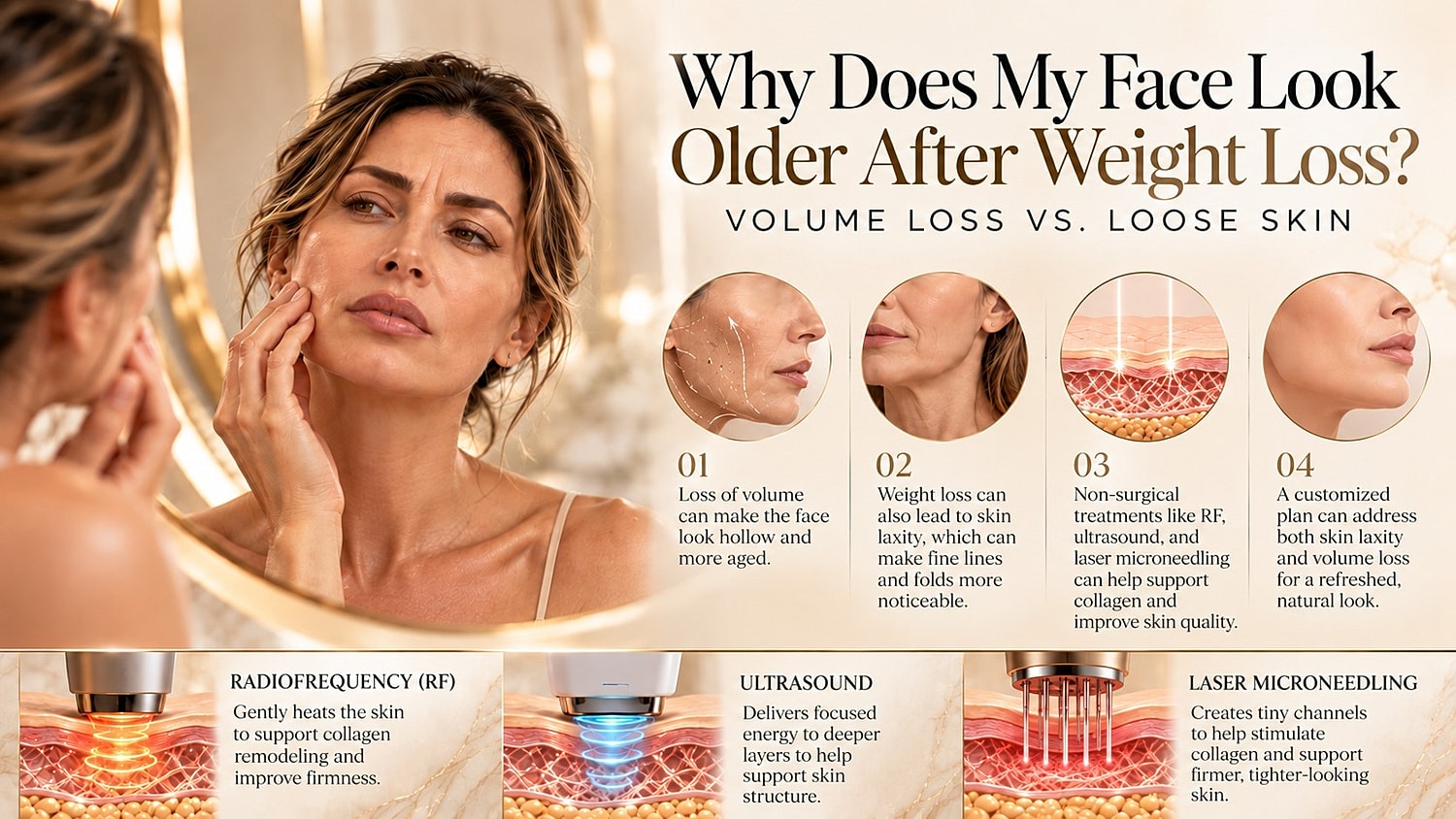
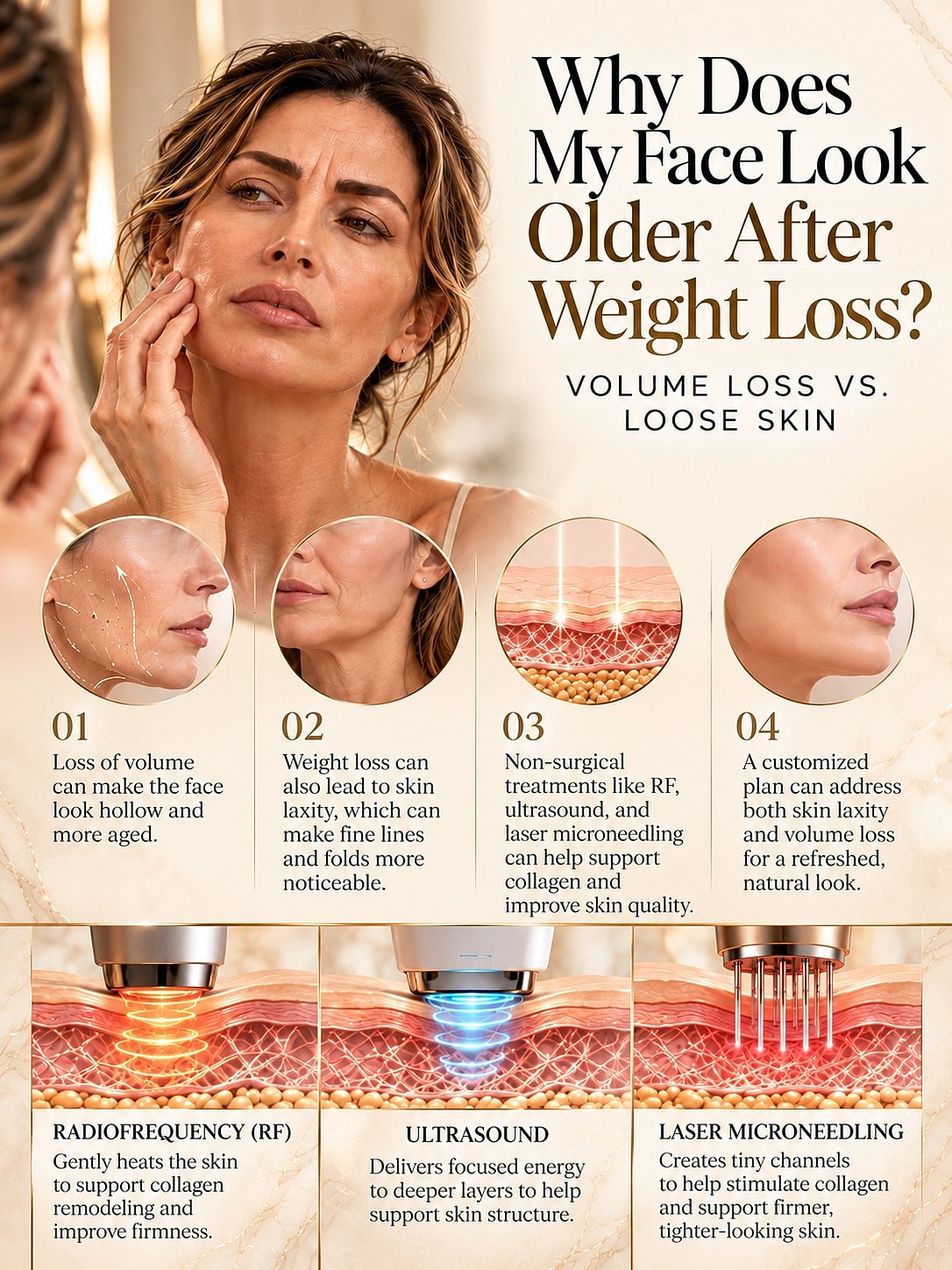
When you lose weight, you lose fat across the whole body, including the face. The soft padding in your cheeks, under your eyes, and around your mouth gets thinner. This can make your cheekbones and jawline look sharper. Folds around the nose and mouth that were once gently filled in can now look deeper. It is like taking some stuffing out of a pillow: the cover is the same size, but there is less filling inside, so every wrinkle and crease is easier to see.
This change can also uncover skin laxity that was already there. As we age, skin slowly stretches and loses some firmness, and weight loss can make that more obvious. Fine lines, mild jowls, and loose areas along the jaw or under the chin can show up more when the face is leaner. This is a common pattern doctors see every day and does not mean you made a mistake by losing weight. It simply means the support under the skin has changed, and now the face needs a new plan for support and care.
After a big weight change, many people ask if their face is "just loose," "too hollow," or if there is real extra skin. Understanding the difference can make your next step feel much less scary. The three main types of change that can show up in the mirror after weight loss are below.
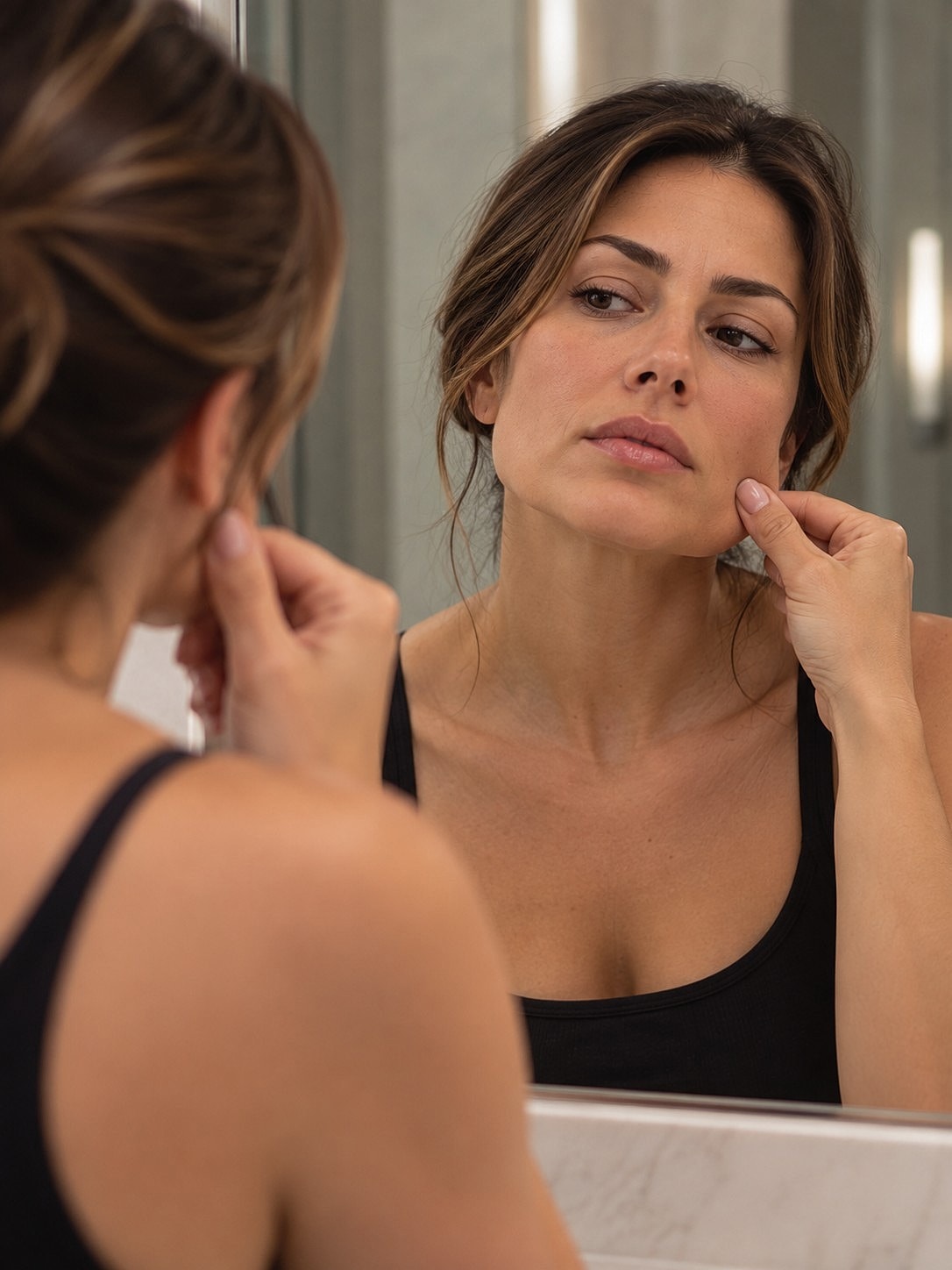
Volume loss means the face has less filling under the skin. In the mirror, the cheeks may look flat or sunken, the temples can look hollow, and shadows under the eyes can look stronger. The face can look more tired or older even when the skin itself is not very loose. It may feel like there is "less of you" in the mid face. Volume loss often needs treatments that add or rebuild support under the skin, not just tighten the surface.
Skin laxity means the skin is looser and does not snap back as well, but it is not hanging in big folds. You may see soft jowls along the jawline, mild drooping in the cheeks, or fine, crinkly lines around the mouth and eyes. When you gently lift the skin with your fingers, it may look much smoother. This type of change often responds to treatments that firm and tighten the skin, like RF Skin Tightening or Laser Microneedling.
True excess skin is when there is more skin than the area really needs, so it hangs or folds over itself. You might see deep folds near the mouth, a "curtain" of skin under the chin, or extra skin that still hangs even when you lift it. This is more common after very large weight loss. Lasers and tightening devices can help the quality of this skin, but they cannot remove big folds. When extra skin is this strong, a surgical talk is often needed to get the clean shape many people want.
A few simple checks at home can help you see if your main issue is volume loss, skin laxity, or both. First, look in the mirror with your face relaxed, then smile softly. If hollow areas in the temples, under the eyes, or in the mid cheeks stay sunken when you smile, that points to volume loss. If your cheeks look very flat from the side, or if makeup seems to "sink" into the under eye area, that also suggests a lack of support underneath.
Next, check for loose skin. Gently pinch the skin in front of your ear or along the jawline. If the skin feels thin, crepey, or slow to bounce back, that is laxity. If you see soft jowls or a wavy jawline that smooths out when you lift the skin up toward your ears, that is also laxity. True extra skin looks like a fold that still hangs even when you lift. Most people have a mix of hollow spots and loose spots. A visit with a cosmetic dermatologist in Miami can give a clear answer and a plan built just for your face, instead of guessing based on one feature.
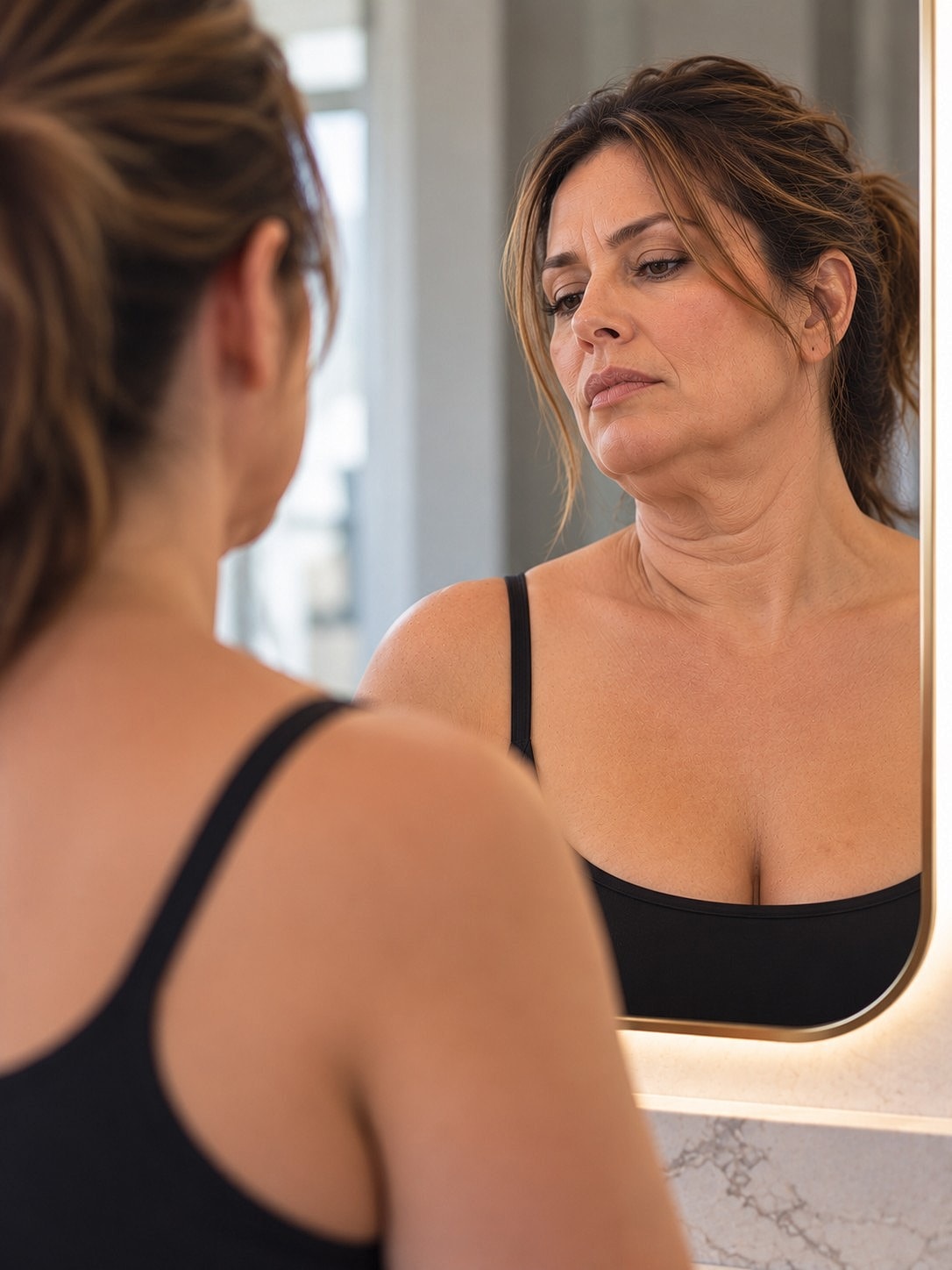
Skin tightening treatments, including many lasers and devices, are designed to firm and tighten the skin, not to replace missing volume. They work by heating or gently injuring the dermal and deeper layers of the skin so the body makes more collagen, which can give a smoother, tighter look. This can help soft jowls, mild laxity, and fine lines, but it cannot bring back the fat that once filled your cheeks or temples. Trying to "tighten away" true hollows is like pulling a sweater tighter over a missing shoulder pad. The sweater may fit closer, but the missing support is still gone.
If a face is already quite hollow, too much tightening without any new support can sometimes make it look even thinner or sharper. This is why a good exam is so important. At Certified Cosmetics, we look at the bone structure, fat pads, and skin all together. Some patients do best with mostly tightening, some need volume support, and some need a careful mix of both. The goal is balanced, natural looking change that fits your age, face shape, and personal taste, not a pulled or overdone look.
Several non-surgical tools can help loose facial skin after weight loss. Radiofrequency (RF) skin tightening uses gentle heat in the deeper skin to trigger collagen over time. It can help mild to moderate laxity and is often done in a series of sessions. Ultrasound devices can reach deeper, closer to the tissue that surgeons lift in a facelift. However, the effects of collagen stimulation of that layer have not been clearly established. Both types have limits: they do not remove extra skin or replace missing fat, and results build slowly over months. At Certified Cosmetics we offer the Oligio X for RF skin tightening. Targeting the dermal layer for collagen stimulation and avoiding deeper layers that can cause fat loss or nerve damage.
Our newer laser microneedling, developed by Dr. Gaitan, focuses on both skin quality and tightening. Microneedles create tiny channels while a fractional laser encourages fresh collagen and elastin with a controlled, comfortable energy pattern. This type of treatment can soften fine lines, improve texture and pores, and give a tighter, smoother look without heat than many previous devices rely on. Laser microneedling is also enhanced with a skin booster depending on if you are trying to target hydration or maximize collagen stimulation.
At Certified Cosmetics, the team will choose between laser-based tightening or RF skin tightening depending on your skin, age, and how much laxity you have.

Many people do not want to "fill their face" after losing weight, and that feeling is valid. Not every lean face needs filler. Sometimes, making the skin itself healthier can bring back a rested look even when the face stays slimmer. When texture is smoother, tone is more even, and the skin has more glow, shadows and fine lines do not stand out as much, and the whole face can look less tired.
In Miami, Dr. Gaitan often uses laser and energy-based devices to stumulate your skin. Laser Microneedling can firm the skin, refine pores, and refresh texture. Pairing Laser Microneedling with Rejuran adds deep hydration and supports healing, which can make the skin look plumper and dewier. When it is a good fit, Juvelook can be used as a collagen stimulating booster to gently rebuild support over time. These treatments are planned to give gradual, natural looking change.
In patients that want more contouring, RF Skin Tightening with Oligio X can be used.
At each visit, the plan is adjusted based on where you have lost volume, how your skin is aging after weight change, and what feels right to you.
Non surgical treatments are very helpful for early to moderate change, but they cannot do everything. If the skin on the face or neck is truly hanging, folding over itself, or hiding key features like the jawline, no laser, RF device, or ultrasound treatment can remove that extra tissue. Signs that point to surgical level extra skin include large folds that feel heavy, a "curtain" of skin under the chin, or skin that still hangs even when you lift the area up with your fingers.
In these cases, non surgical tools can still improve skin quality and help the area heal and age better, but they should not be sold as a full replacement for surgery. Often, the safest and most honest path is to pair good skin care and laser work with a talk about surgery for the extra skin itself. At Certified Cosmetics, patients can start with a cosmetic dermatologist visit to understand what is possible without surgery and, when needed, get guidance toward trusted surgical colleagues who can address strong, hanging folds.
Laser Microneedling combines tiny needles with fractional laser energy to tighten skin and improve texture at the same time. For faces that look older after weight loss, this treatment can help soften fine lines, support the jawline, and boost collagen without adding bulk. It is often a core option when mild to moderate laxity is the main concern.
Learn more
Next generation laser resurfacing uses modern fractional lasers to smooth texture, reduce fine lines, and brighten sun damage with controlled downtime. For patients who feel their face looks tired or weathered after weight loss, this can refresh the surface while other treatments handle laxity or volume. The goal is a smoother, more even canvas.
Learn more
Rejuran is a polynucleotide treatment that can be paired with microneedling or Laser Microneedling to support healing, hydration, and skin quality. After weight loss, this can help skin look more supple and less dull, which often makes a lean face look more rested without changing its basic shape.
Learn more
RF skin tightening treatments use gentle heat from radiofrequency energy to firm the deeper layers of the skin. They are typically best for mild to moderate laxity and can be part of a plan for looser facial skin after weight loss, especially when you want gradual change and little downtime.
Learn more
The Skin Tightening Miami page explains how the practice approaches loose skin, including when lasers, rf skin tightening, and other non-invasive tools are likely to help. It can be a good next read if you want to see how facial treatments fit into your overall post weight loss plan.
Explore options
The Non-Invasive Skin Treatments overview shows how lasers, rf skin tightening, and other advanced tools can support healthier skin without surgery. This can help you see how facial care after weight loss blends with care for tone, spots, and texture in other areas.
View treatments
Some patients like the idea of steady, planned skin care instead of doing one treatment and stopping. After weight loss, the face keeps changing as your weight settles and collagen shifts, so gentle, regular support can make a big difference over time. Certified Cosmetics offers Laser Refresh and Laser Restore memberships that bundle regular laser based treatments to support collagen, texture, and glow on a schedule that fits real life.
Even inside a membership, there is no "one size fits all" plan. At each visit, Dr. Gaitan looks at how your face is aging after weight change and chooses the right tools for that moment, whether that is Laser Microneedling, gentle resurfacing, RF skin tighetning, or another laser combination. If you are interested in ongoing skin rejuvenation for more long lasting results, you can visit the membership page to see what is included and decide if this approach matches your goals and budget.
When you lose weight, you lose fat in the face as well as the body. The fat that once filled your cheeks and smoothed out folds gets thinner, so bone angles, lines, and small loose spots show more. Any mild sagging that was already there can also become easier to see. The result can be a leaner face that looks more hollow, with deeper lines and softer jawlines. This is a common side effect of weight loss and does not mean your weight loss was bad for you; it just means your face now needs a different kind of support.
"Ozempic face" is a term people use when someone loses weight quickly and their face looks older, more hollow, or more saggy. The big change is usually from fast weight loss, not from the medicine itself changing the skin. When weight comes off very quickly, the skin and support tissues have less time to adjust, so hollows and loose spots can show up more. The same thing can happen with fast weight loss from diet or surgery. The good news is that many of the changes, like skin quality and mild laxity, can be improved with the right mix of treatments.
Look at your face in good light. If your cheeks and temples look flat or sunken, and shadows under the eyes stay strong even when you smile, that points to volume loss. If the skin feels thin, crinkly, or slow to bounce back when you pinch it, or if your jawline looks wavy but smooths when you lift the skin, that is laxity. You can also check for folds that still hang even when you lift the area; that is a sign of true extra skin. Many people have a mix of all three, which is why a careful in person exam with a cosmetic dermatologist can be so helpful.
If your face is very hollow and you only do strong tightening, it can sometimes look thinner or more angular. That is why it is important to match the treatment to the main problem. If volume loss is the biggest issue, adding support under the skin or using collagen building boosters may need to come first, or be paired with gentle tightening. When laxity is mild and volume is still good, tightening alone can work well. A thoughtful plan looks at where you need lift, where you need support, and how to keep your features soft, not sunken.
After big weight loss, the face may change for several months as your weight and lifestyle settle. Some people gain back a small amount of fat in the face, which can soften hollows a bit, and the skin can slowly adjust. But in many adults, especially over age 30, the body does not fully rebuild the same volume, and collagen keeps going down with age. Gentle treatments that support collagen and skin quality can help your face age in a healthier way as your new weight becomes your long term normal.
Not everyone needs filler after losing weight. Some faces look best with a slimmer shape and only need help with skin quality or mild laxity. Others have deep hollows in the temples or mid face that are best treated with some volume support, which can include filler or other collagen building treatments. At Certified Cosmetics, the plan starts with what you see in the mirror and what you are comfortable with. Filler is one tool, not the only tool, and it can often be combined with lasers, Laser Microneedling, Rejuran, or Juvelook to keep results natural looking and balanced.
There is no single "best" treatment for everyone, because loose skin, volume loss, age, and skin type are different from person to person. For mild to moderate laxity, options can include RF skin tightening, ultrasound devices, and advanced laser based treatments. At Certified Cosmetics, Dr. Gaitan often uses Laser Microneedling and modern laser resurfacing because they improve both firmness and skin quality. For stronger, hanging skin, non surgical tools can help the quality of the skin but may need to be combined with a talk about surgery to remove extra tissue. The best plan is the one that fits your face, your health, and your comfort level.