 Call Us
 Location
 Book Now
Medically reviewed with expert contribution by Sergio Gaitan, MD, FAAD:
Cosmetic Dermatology & Advanced Laser Treatments | Certified Cosmetics Dermatology & Laser | Miami, Florida
Medical Disclaimer: These articles have been medically reviewed by Dr. Sergio Gaitan, MD, FAAD, and are intended for educational and informational purposes only. Information reflects current medical knowledge at the time of publication and is subject to change as new research and advancements emerge. This content is not a substitute for professional medical advice, diagnosis, or treatment. Always consult a qualified healthcare professional before pursuing any medical or cosmetic treatment.

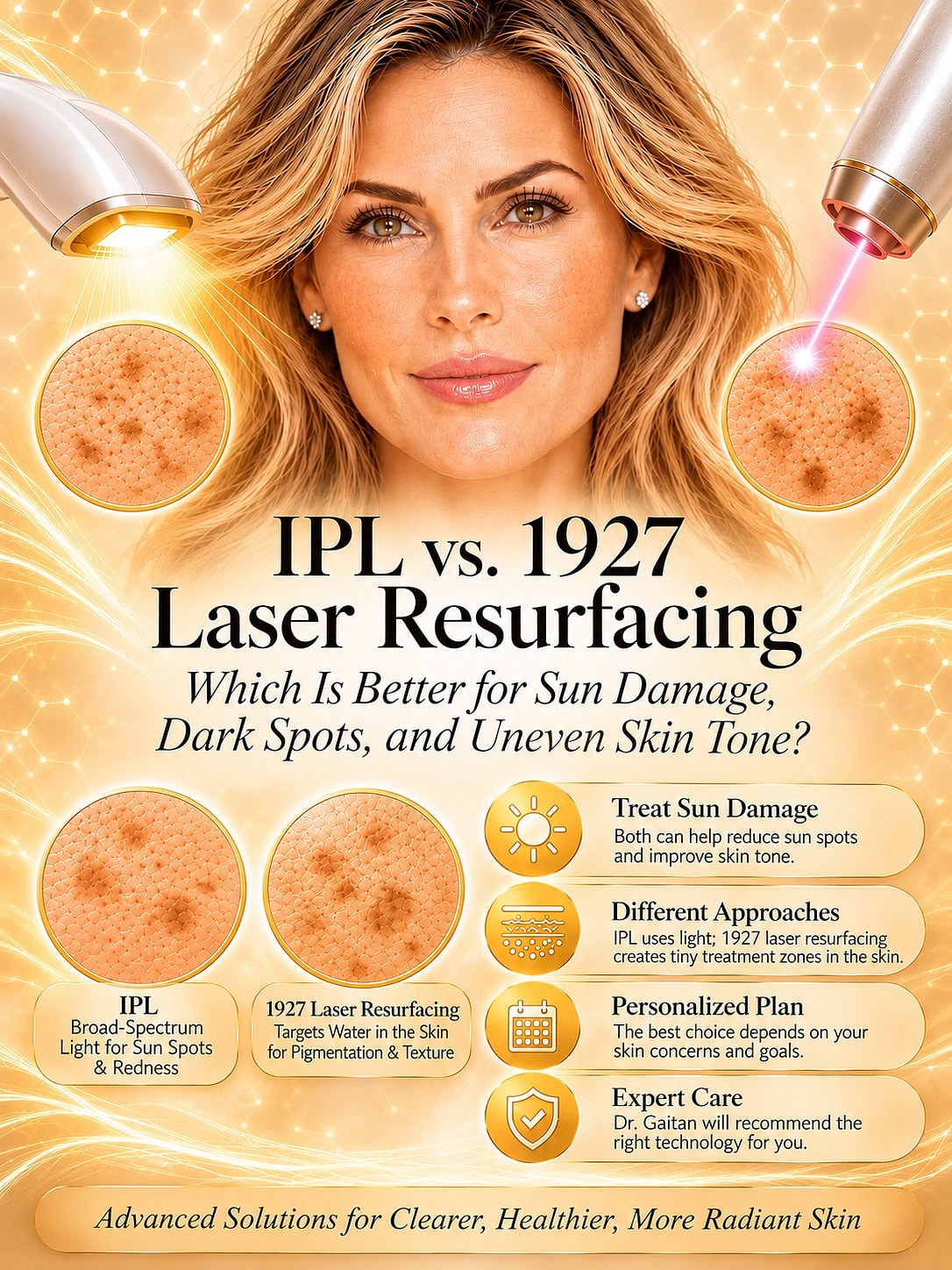
A clear, side‑by‑side skin treatment comparison
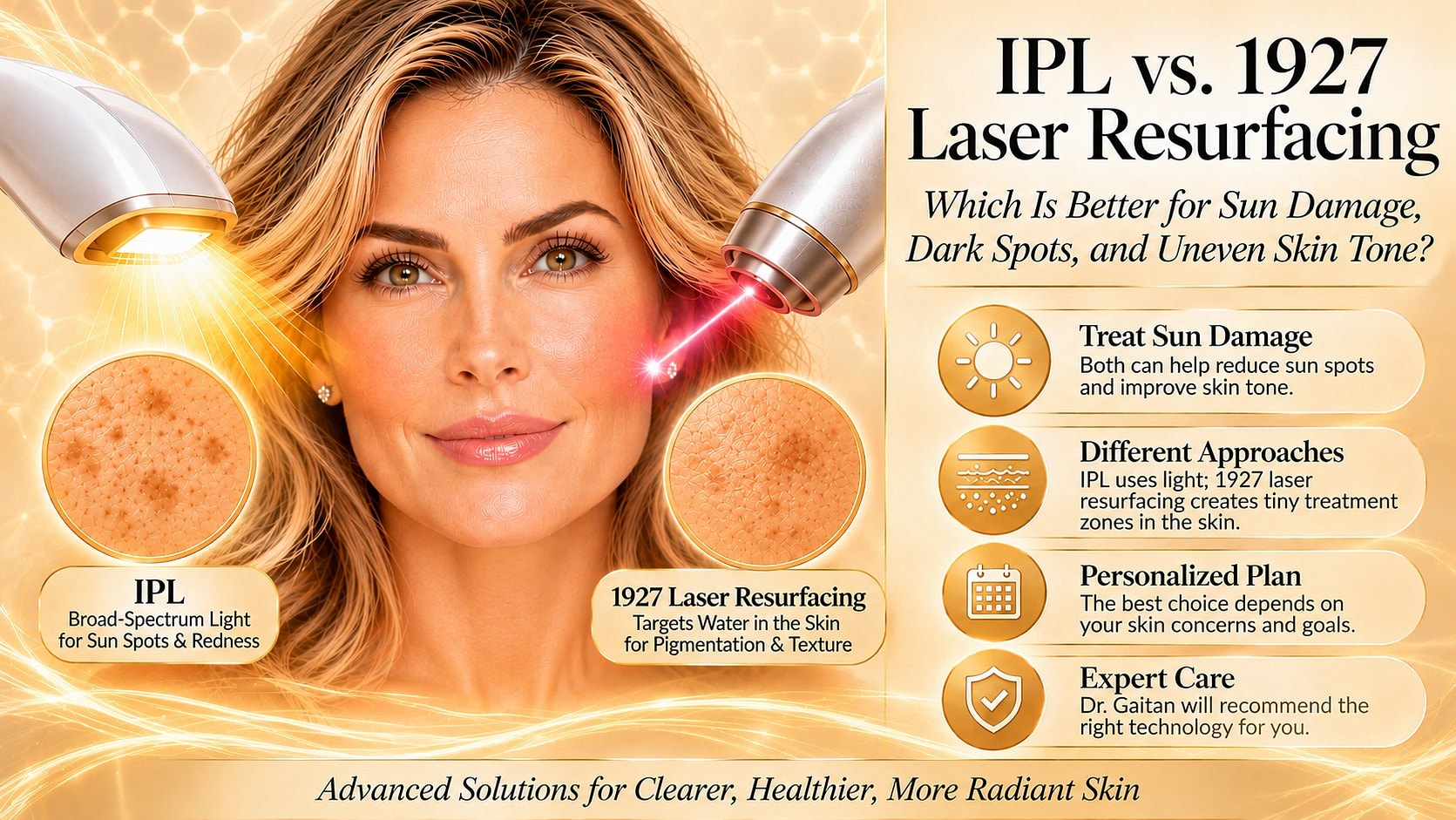
If you have sun damage, brown spots, or uneven skin tone, you have probably seen both IPL “photofacials” and Laser Resurfacing recommended online. IPL uses intense, broad spectrum light filtered into bands that target pigment and redness. Laser resurfacing can be done with many wavelengths. In this article we will discuss 1927 Laser Resurfacing. A fractional 1927 nm laser is used to create thousands of microscopic treatment zones in the skin by targeting water in the tissue. the 1927 laser is highly absorbed by water and so is great for superficial laser resurfacing.
Neither technology is universally better. They do different things. IPL is great for treating superficial red and browns in lighter skin tones. 1927 laser is great for superficial resurfacing improving texture. One of the advantages of targeting superficially it that any pigmentation in those layers is targeted and improved with this treatment. In some cases of high density resurfacing some reds may be improved as well.
Use this guide as a starting point to understand your options. A detailed, in office skin evaluation is still the safest way to decide between IPL, 1927 Laser Resurfacing, and other advanced laser options for sun damage and pigmentation.
Key facts in one place
IPL, or intense pulsed light, is a non laser light treatment. A handheld device delivers brief flashes of broad spectrum light that are filtered into specific wavelength bands. These bands are selectively absorbed by brown pigment (melanin) and by hemoglobin in blood vessels, which helps fade sunspots and reduce redness from conditions like rosacea. IPL is typically used in a series of low downtime treatments.
1927 Laser Resurfacing uses a fractional non ablative 1927 nm laser. This wavelength targets water in the skin and deposits energy in a controlled pattern of microscopic treatment columns that extend through the epidermis and into the superficial dermis. Surrounding tissue is left intact, which helps the skin heal. This fractional approach can improve pigmentation, fine lines, pores, and texture while stimulating new collagen over time.
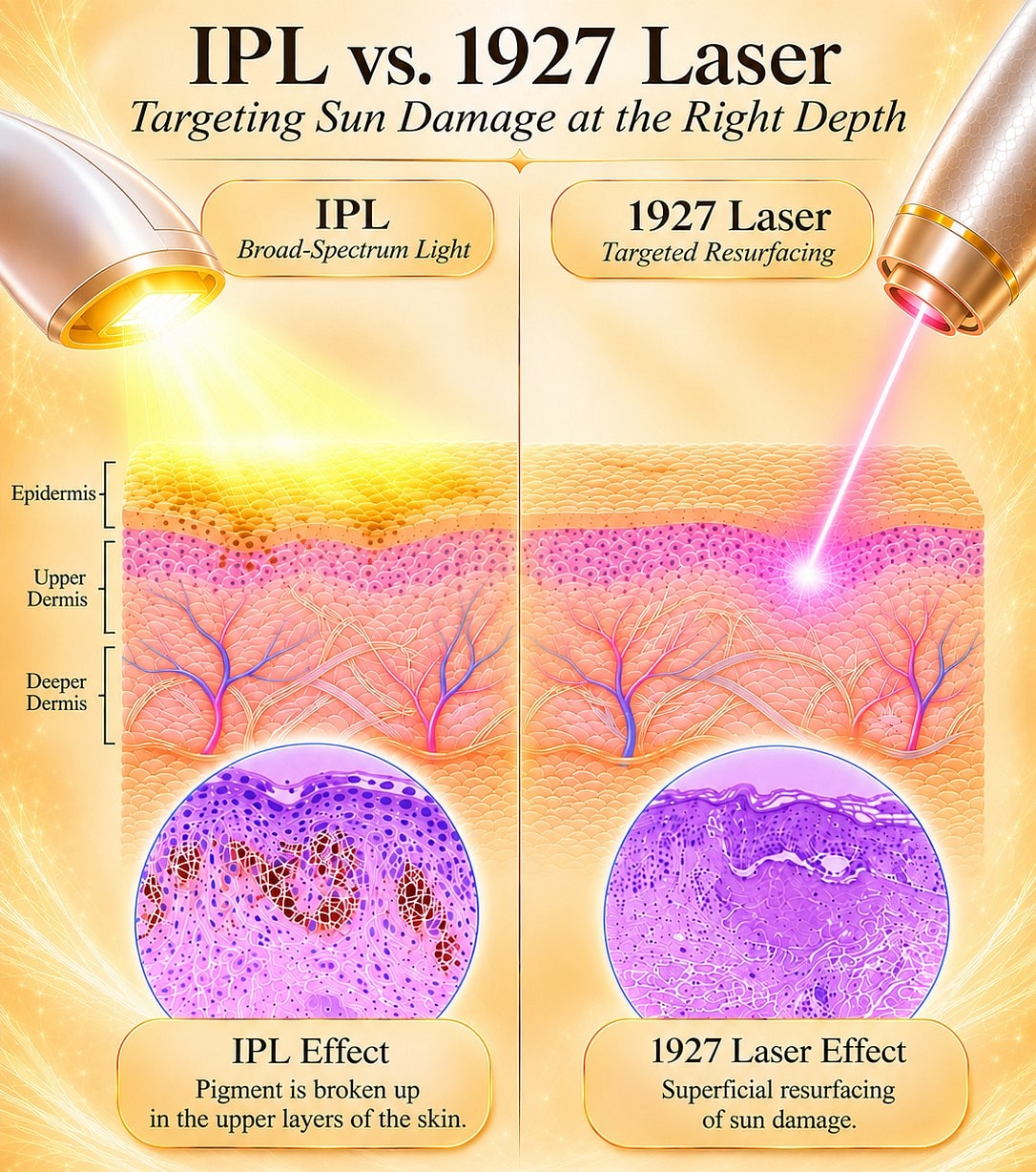
How light and laser interact with your skin
How IPL works:
IPL devices emit intense pulses of broad spectrum visible and near infrared light. Interchangeable filters narrow that light into wavelength ranges that are preferentially absorbed by brown pigment and by blood in superficial vessels. When a pulse is delivered, pigmented spots and tiny vessels briefly heat up more than the surrounding skin. That controlled heat damages the target structures so the body can gradually clear them. Clinically, this helps fade sunspots, freckles, and some forms of redness and blotchiness. Because the light is not as precisely confined to a single wavelength as a laser, device choice, settings, and skin type selection are important to reduce the risk of unwanted pigment changes.
How 1927 Laser Resurfacing works:
A 1927 nm fractional laser targets water in the skin rather than pigment or blood specifically. Each pulse creates a grid of microscopic treatment zones, also called microthermal zones or microchannels. Within each column, heat is deposited in the epidermis and superficial dermis, triggering a controlled injury. The untreated skin between columns helps with rapid healing. Over days to weeks, the upper layers exfoliate, revealing a more even tone, while deeper remodeling can gradually soften fine lines, reduce the appearance of enlarged pores, and improve overall texture. Because it is fractional and non ablative, the surface is not fully removed, which generally translates to a more manageable recovery than traditional full field ablative laser resurfacing.
In practical terms, IPL tends to be more focused on skin tone, while 1927 Laser Resurfacing addresses both color and structure. IPL is often helpful for scattered sunspots, freckles, and background redness when the skin texture is still relatively smooth. A 1927 fractional laser can address similar pigmentation but also reaches into the dermis to stimulate collagen, which can improve fine lines, early crepey changes, and some acne related texture concerns. One important thing to note is IPL is not safe in all skin tones and works safest in fair skin. 1927 laser resurfacing can be optimized for all skin tones by adjusting energy and density of treatment.
Neither technology is perfect for every problem, and neither replaces a full suite of lasers and energy devices in a comprehensive practice. The best choice depends on your skin tone and whether your main priority is evening out color, improving texture and fine lines, or addressing both.
Comparing your options
When patients are deciding between IPL and 1927 Laser Resurfacing, it helps to look at each technology in terms of its usual strengths, limitations, and where it fits into a modern laser program. The summaries below are general patterns, not hard rules, and your skin may call for a different approach or for a combination of treatments.
IPL is often used as a series of quick, low downtime sessions to address pigment and redness. It can lighten sunspots and freckles, reduce visible capillaries and some redness, and improve overall blotchiness. Most patients need multiple treatments to build and maintain improvement. Strengths include relatively short treatments, minimal disruption to daily life, and the ability to cover broad facial or chest areas. Limitations include less impact on texture and fine lines. Based on clinical experience IPL should be avoided in darker skin tones, melasma, or recent tans to avoid unwanted damage. Especially now with the advent of newer laser technologies.
1927 Laser Resurfacing is typically chosen when patients want visible improvement in both color and texture. A fractional 1927 treatment can soften fine lines, refine enlarged pores, and improve early crepey changes while also addressing sun induced pigmentation. Many patients notice more pronounced short-term redness and peeling compared to IPL but appreciate the deeper remodeling and longer lasting collagen changes that unfold over several months. Limitations include a few days of social downtime and the need for diligent sun protection and skincare after treatment.
In some cases, the most effective strategy is to use IPL or a 1927 laser alongside other devices in combination. At Certified Cosmetics we often combine our 1927 laser with complementing technologies such as Pico Laser, Vascular Laser or deeper laser resurfacing to help treat melasma, redness, or deeper wrinkles or scars. These layered approaches aim to improve multiple components of photoaging while keeping downtime and safety in balance. Combination protocols should always be customized rather than based on a one size fits all package.
From sunspots to enlarged pores
Both IPL and 1927 Laser Resurfacing are commonly used to address signs of chronic sun exposure. Shared targets include sunspots, freckles, age spots, uneven skin tone, and a dull, tired looking complexion. 1927 fractional treatments extend further by improving fine lines, early crepey changes, enlarged pores, and some superficial acne related scarring, thanks to their collagen stimulating effect. IPL is often chosen when the main concerns are scattered brown spots and redness on relatively smooth skin, while a 1927 fractional laser is more often considered when uneven texture and pores are equal priorities alongside pigment.
In everyday practice, IPL protocols frequently focus on the face, neck, chest, and sometimes the backs of the hands for color correction and redness. 1927 Laser Resurfacing is most commonly used on the face, and in selected cases the neck and chest, where texture and fine lines respond well and where meticulous aftercare is realistic. For both treatments, any pre existing conditions like melasma, active acne, or a history of keloids can affect whether these areas are suitable.
For most patients seeking help with sun damage, high yield treatment regions include the face, neck, chest, and occasionally the hands and forearms. The exact areas treated in a given session depend on your skin type, lifestyle, and how much short term redness or peeling you can reasonably accommodate. At Certified Cosmetics, treatment plans are customized. 1927 Laser Resurfacing, or alternative laser options are used only where the expected benefits outweigh the risks and downtime.
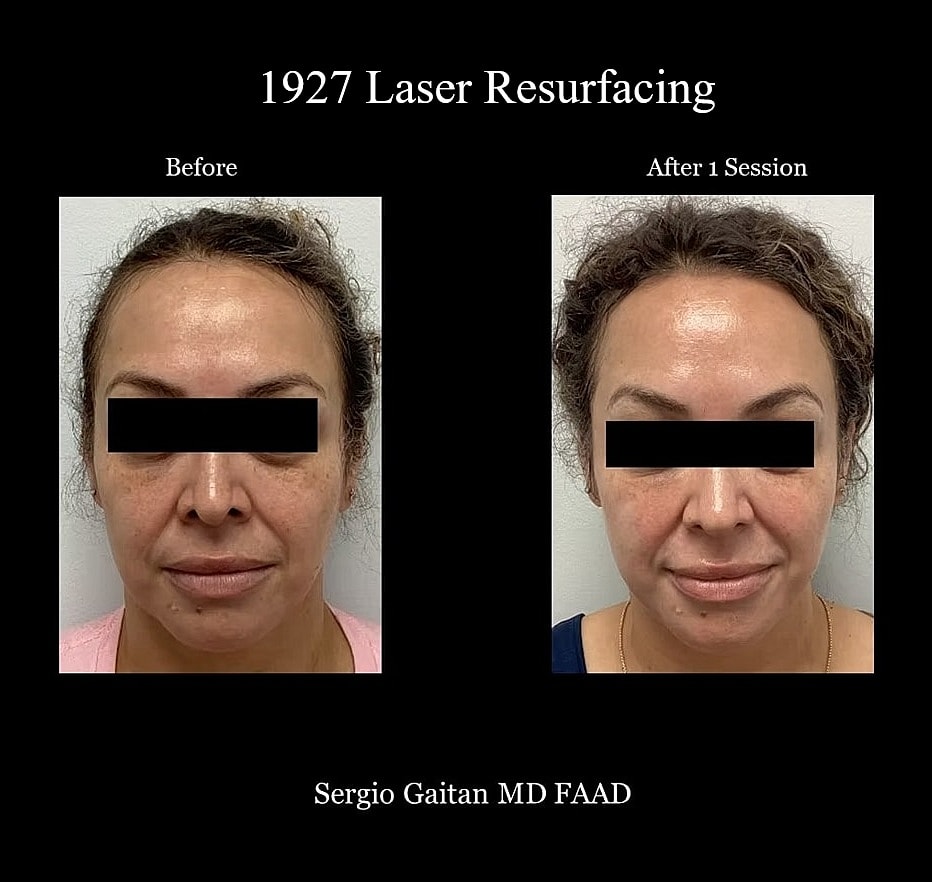
Results, downtime, and sessions
Both IPL and 1927 Laser Resurfacing aim to create clearer, more even looking skin. Many patients notice a brighter tone, lightening of brown spots, and an overall fresher appearance. Fractional 1927 treatments can also gradually soften fine lines, refine the look of enlarged pores, and smooth mild textural irregularities because they trigger collagen remodeling beneath the surface. IPL typically involves minimal downtime, with darkening or “coffee ground” bronzing of spots that flake off over several days. 1927 fractional treatments usually involve several days of redness, swelling, and sandpaper like texture before the skin peels and reveals early improvement. 1927 laser resurfacing can also be customized to less aggressive treatments requiring less downtime at the tradeoff of more sessions.
Session counts also differ. IPL protocols often involve a series of 3-5 sessions, spaced about a month apart, to build improvement in pigment and redness. 1927 Laser Resurfacing is often performed as 1-3 sessions in a series, sometimes combined with other lasers depending on your goals. Maintenance treatments for either approach may be recommended once or twice a year, particularly in sunny climates, along with daily sunscreen and pigment safe skincare to help results last.
In the first 24 hours after IPL, you can expect mild redness and warmth similar to a sunburn, followed by darkening of treated spots that gradually slough off over 3-7 days. Most people feel comfortable returning to work and social activities right away, as long as they are comfortable with temporary bronzing. After 1927 Laser Resurfacing, the first couple of days commonly involve more pronounced redness and puffiness, followed by several days of rough, dry, or sandpaper like skin and visible peeling. Many patients plan a few days of quieter social schedules during this period. Early brightening and texture changes often become noticeable within 1-2 weeks, with collagen related improvements continuing to evolve over several months as the skin rebuilds. At Certified Cosmetics we also offer skin care imported from Korea designed to help with the recovery from laser resurfacing.

Safety, skin tone, and personalization
Good candidates for IPL usually have light skin tones with visible sunspots, freckles, and redness, and are willing to complete a series of lower downtime treatments. They do not have melasma. Ideal features include relatively smooth texture, no recent intense sun exposure, and no active infections or open lesions in the treatment area.
Candidates for 1927 Laser Resurfacing are often patients who want more noticeable change in both pigmentation and texture, are prepared for a few days of visible redness and peeling, and can commit to careful aftercare and sun protection. In both cases, recent tanning, certain medications that increase photosensitivity, and untreated inflammatory skin conditions can make treatment unsafe or less predictable.
Some people are not good candidates for either technology at certain times. Examples include patients with very recent sun exposure, active skin infections, uncontrolled acne in the treatment area, a history of abnormal scarring in the planned field, or medical issues that impair healing.
Traditional IPL platforms are not appropriate for very deep skin tones because of a higher risk of burns, scars, post inflammatory hyperpigmentation or hypopigmentation. At Certified Cosmetics we treat all skin tones and that's why we carry more precise laser technology that allows us to treat all skin tones.
Melasma and skin of color require special attention. Melasma is highly sensitive to heat and nonspecific light, and treatments that are too aggressive can worsen the condition. Similarly, patients with darker skin tones or a history of post inflammatory hyperpigmentation need protocols that respect how their skin responds to energy and inflammation.
In these cases, IPL and 1927 Laser Resurfacing are typically not the best option. Other focused lasers like Pico Laser for pigment, vascular laser for redness can be used to target problems more directly.
At Certified Cosmetics our team will analyze you skin and determine what is the best treatment for your skin.
From consultation to clear skin plan
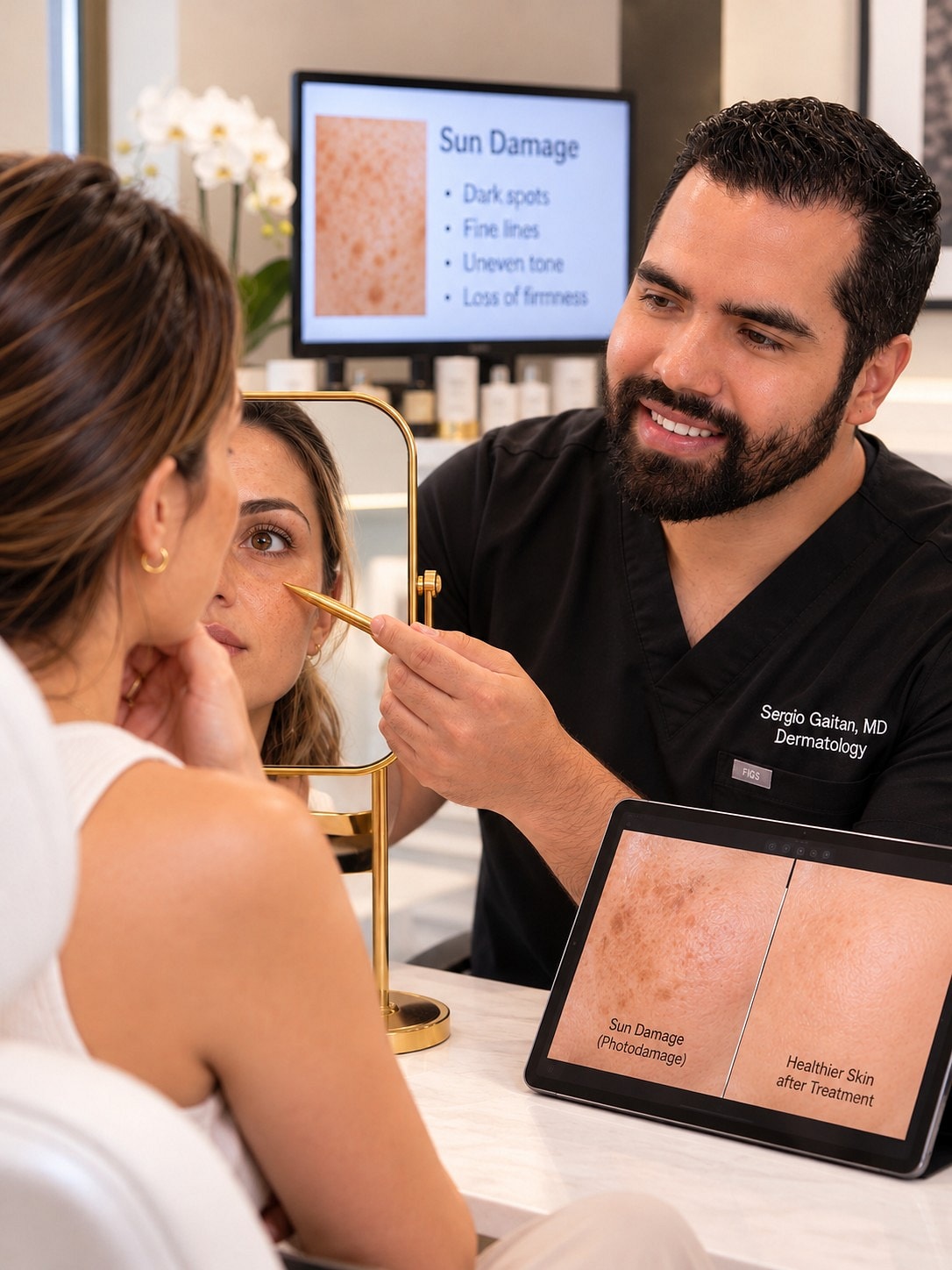
Preparation for either treatment usually starts several weeks before your first session. You will be asked to avoid tanning and consistent unprotected sun exposure, to pause certain topical products that increase sensitivity (such as strong retinoids or exfoliating acids), and to disclose medications or supplements that may affect healing. During your consultation, our team will review your history, examine your skin closely, and discuss which treatment best aligns with your goals.
At Certified Cosmetics for pigment, we offer the PicoAlex Pico Laser that has no downtime and targets pigment directly through pressure and not heat. Sessions are relatively quick. We provide protective eyewear and during treatment you may feel a slight sensation that self resolves quickly.
For Redness, we have the DermaV Vascular Laser. It provides a cooling spray with certain treatments for comfort, and you will feel brief, bright pulses that can sting like a rubber band snap.
For 1927 Laser Resurfacing, topical numbing cream is typically applied before treatment to improve comfort. After numbing, the fractional laser handpiece is passed methodically over the treatment area. Most patients describe the sensation as warm, prickly, or like a series of pinpricks, and treatment time depends on how many regions are addressed. The full visit, including numbing and aftercare instructions.
In both cases, you will leave the office with specific instructions for gentle cleansing, moisturizing, and strict sun protection.
After Pico Laser you can expect mild darkening of the pigmented areas. The pigment then starts to improve over the coming weeks.
After Vascular Laser, you can expect mild redness and warmth for a few hours. You may have some swelling that self resolves in 2-3 days.
After 1927 Laser Resurfacing, redness and swelling are most noticeable in the first 1-3 days, with a sandpaper like feel and bronzing that gives way to mild pinpoint peeling over about 3-7 days. Visible improvements in tone and texture continue to emerge over 1-3 months as collagen remodeling progresses.
Multiple sessions for either treatment are common, and ongoing sunscreen use plus supportive skincare, when appropriate, prescription topicals, help maintain results.
Plan the right treatment, not just the right device
The cost of IPL or 1927 Laser Resurfacing depends on several factors, including which device is used, the number of sessions recommended, how many areas (such as face, neck, chest, or hands) are treated, and whether combination treatments are part of the plan. Long term maintenance and supportive skincare may also influence the overall investment.
For patients sorting through IPL vs 1927 Laser Resurfacing, one of the biggest advantages of our practice is that cosmetic laser treatment protocols have all been developed by a board-certified dermatologist, Sergio Gaitan, MD, FAAD. He is a KOL and speaker for the major laser companies. For more precise treatment of reds and browns than IPL, Certified Cosmetics offers a dedicated vascular laser for redness and a dedicated Pico laser to treating pigment.
Certified Cosmetics is known for best-in-class lasers, exclusive combination laser treatments, and comfortable protocols designed around Miami lifestyles, with an emphasis on minimal unnecessary downtime. Instead of pushing a single device, we build a personalized, evidence informed roadmap for sun damage, dark spots, and skin quality. If you are weighing IPL, 1927 Laser Resurfacing, and other options, you are welcome to schedule a Personalized Aesthetic Assessment to review your skin, your goals, and the safest way to help you move toward clearer, more even, and refreshed looking skin.
At Certified Cosmetics, pricing and recommended series are reviewed with you in detail at your consultation so you can understand the plan. For the best value we offer our limited Laser Memberships.
Answers to common questions
For a small number of discrete sunspots (solar lentigines) on otherwise smooth skin, both IPL and fractional 1927 lasers can help lighten lesions. Standard protocol is to treat discrete lesions with an IPL or a pigment targeted laser like the PicoAlex pico laser. Fractional 1927 laser resurfacing performs better for diffuse pigment or sun damage, if you want to also improve texture and pores. The best choice depends on your skin tone, the depth and color of the spots, and whether there is any underlying melasma. In cases of melasma we prefer a pigment focused laser like the Pico laser. In order to avoid heat, a common trigger of melasma.
Most IPL plans involve a series of about 3-5 sessions spaced roughly 4 weeks apart, followed by periodic maintenance treatments if you continue to receive significant sun exposure. Fractional 1927 Laser Resurfacing is often performed as 1-3 sessions, sometimes layered with other lasers over time. Results for both are long lasting but not permanent, because ongoing sun exposure and natural aging continue. Good sunscreen habits, protective clothing, and a pigment safe skincare routine can extend the life of your results and may reduce how often you need touch up treatments.
It is generally safest to avoid IPL and fractional resurfacing on recently tanned skin. A fresh tan increases the amount of melanin in the upper layers, which can raise the risk of unwanted darkening or lightening after energy-based treatments. Many patients are advised to let a tan fade and to practice strict sun protection for several weeks before treatment. During your consultation, our team will evaluate your current skin color, recent sun exposure, and timing to determine when it is safe to schedule your laser treatment.
Topical products can support results when used correctly. Strong retinoids and exfoliating acids are often paused several days before and after each session to reduce irritation risk. Vitamin C serums that are well tolerated may be resumed after the skin has fully recovered to help address ongoing oxidative stress from sun exposure. Hydroquinone or other pigment modulating prescriptions are sometimes used in focused courses before and after procedures in patients with stubborn pigmentation or a history of post inflammatory hyperpigmentation, but these decisions are individualized. Our team will provide you a specific skincare plan for before and after treatment.
Costs vary based on the device, the number and size of areas treated, the total number of sessions in your plan, and whether other lasers or treatments are combined at the same visit. Package pricing and membership based programs can sometimes help patients plan a series of laser sessions more predictably. At Certified Cosmetics, you will receive a personalized quote after your skin is evaluated and the full plan is outlined, so you know what to expect before moving forward. Our general pricing is available here.
Most patients describe IPL as feeling like quick rubber band snaps with brief warmth. Discomfort is usually manageable without numbing, and cooling measures may be used during treatment. Our vascular laser has a built in cooling spray to help with comfort. Pico Lasers is very comfortable and does not require any anesthesia.
1927 Laser Resurfacing tends to feel more intense because energy is delivered into the skin in thousands of tiny columns, but topical numbing cream, cooling, and careful technique make treatments tolerable for the vast majority of patients. After laser resurfacing a temporary sunburn like sensation is common and is typically managed with cool compresses and an optional laser recovery kit we offer to our patients.
Certified Cosmetics is located in West Kendall.
Our World Class Laser Center provides Laser Treatment for the Face and Laser Resurfacing near Miami, Kendall, Coral Gables, South Miami, Pinecrest, Brickell, Midtown Miami, Coconut Grove, Doral, Design District, Aventura, Key Biscayne, Miami Beach