 Call Us
 Location
 Book Now
How we treat Redness in Miami
Medically reviewed with expert contribution by Sergio Gaitan, MD, FAAD:
Cosmetic Dermatology & Advanced Laser Treatments | Certified Cosmetics Dermatology & Laser | Miami, Florida
Medical Disclaimer: These articles have been medically reviewed by Dr. Sergio Gaitan, MD, FAAD, and are intended for educational and informational purposes only. Information reflects current medical knowledge at the time of publication and is subject to change as new research and advancements emerge. This content is not a substitute for professional medical advice, diagnosis, or treatment. Always consult a qualified healthcare professional before pursuing any medical or cosmetic treatment.

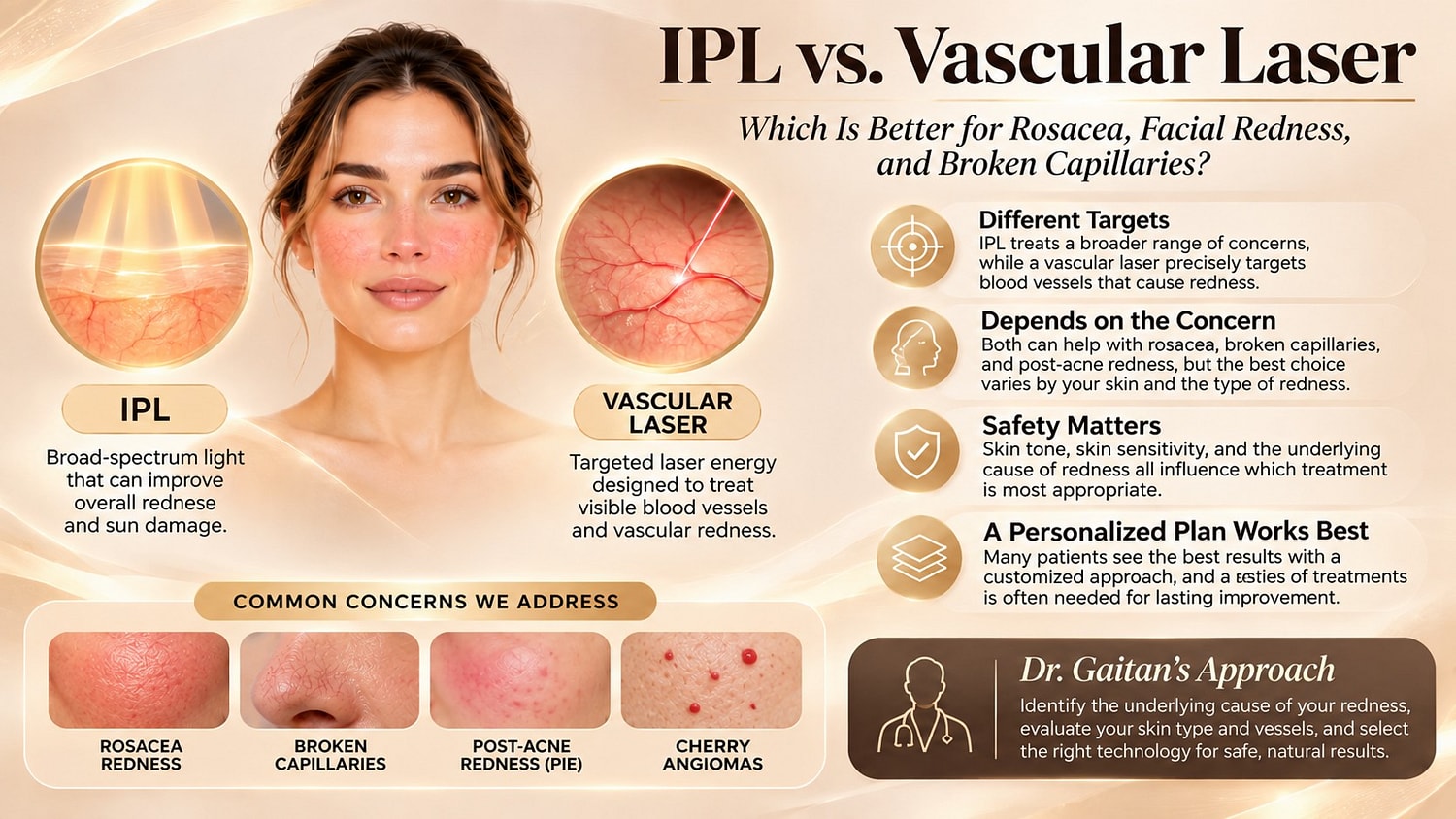
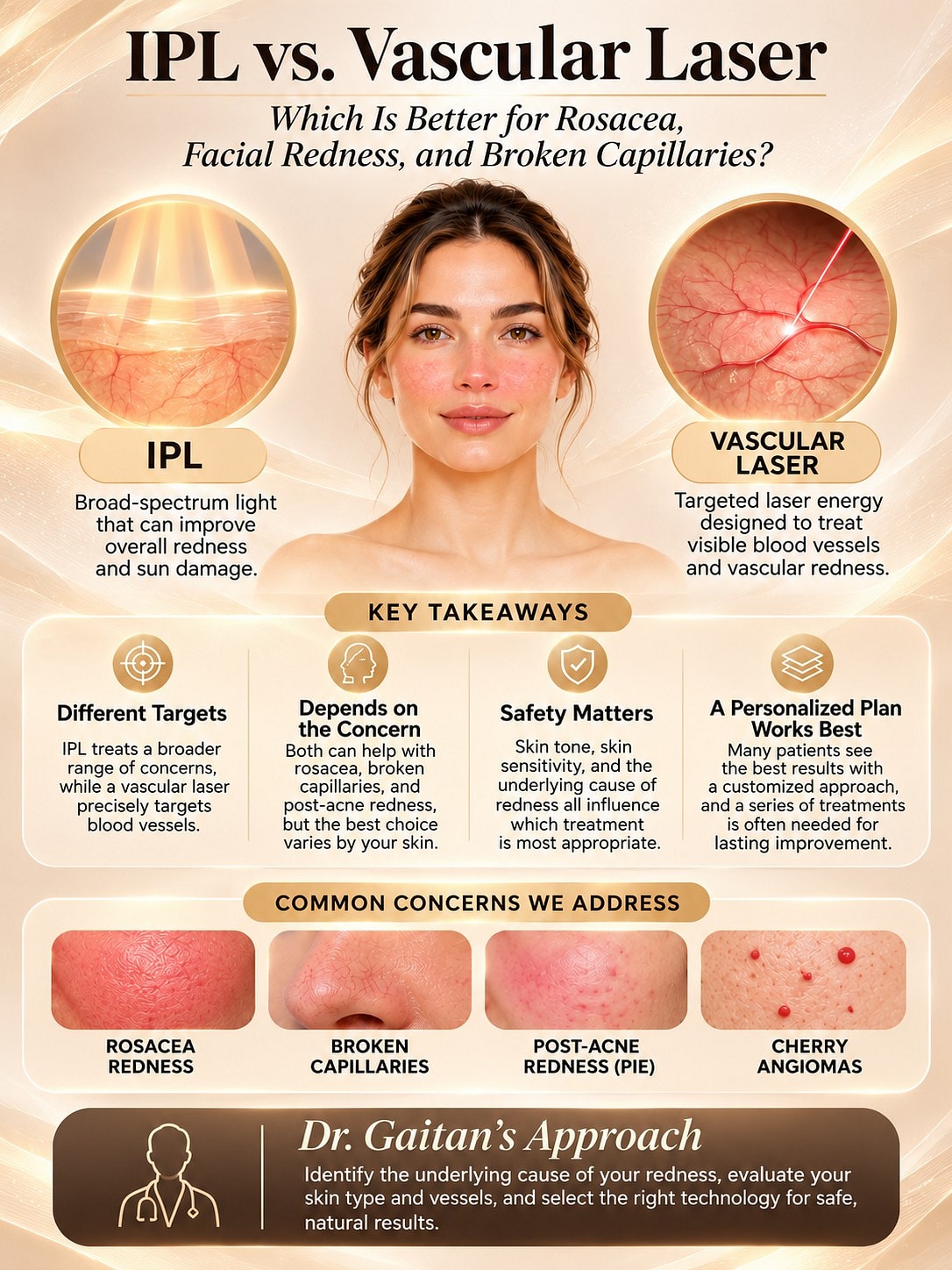
Intense pulsed light (IPL) and vascular lasers are both light based treatments used to reduce unwanted redness, facial flushing, and visible blood vessels. IPL delivers broad spectrum pulses that are filtered to target pigment and hemoglobin, while vascular lasers use a single, precise wavelength that is preferentially absorbed by blood in the vessels. This article is written by Sergio Gaitan MD FAAD, a board certified dermatologist in Miami, to offer an objective comparison so you can better understand how each option works for rosacea, broken capillaries, and post acne redness.
There is no one size fits all answer to whether IPL or a vascular laser is better. The safest and most effective choice depends on your skin tone, the pattern of redness, the size and depth of your vessels, and how much downtime you can accept. At Certified Cosmetics, each patient in Miami receives a personalized evaluation before any light based treatment is recommended. The goal of this guide is to explain mechanisms, precision, safety across skin tones, and downtime so you can arrive at your consultation prepared with the right questions.
IPL, or intense pulsed light, is not a true laser. It is a flashlamp system that emits many wavelengths of light in a broad band. Filters are used to narrow that band so more of the light is absorbed by specific targets such as brown pigment or hemoglobin in blood. Because IPL covers a range of wavelengths, it can address several concerns in the same session, including mild redness and sun related pigmentation, particularly in lighter skin tones. The tradeoff is that the energy is less tightly focused, so precision is lower compared to a dedicated vascular laser.
Vascular lasers are true lasers that emit a single wavelength of light designed to be absorbed by blood in visible vessels. The most popular wavelengths are 532,585,595, and 1064. The laser energy heats the vessel wall while attempting to spare surrounding skin. Pulse duration, spot size, and cooling are adjusted to match the size and depth of the vessel, so the blood vessel is damaged and gradually cleared by the body. Modern vascular lasers often integrate advanced cooling and real time feedback to improve comfort and reduce the risk of bruising, purpura, or pigment changes when used by an experienced physician.
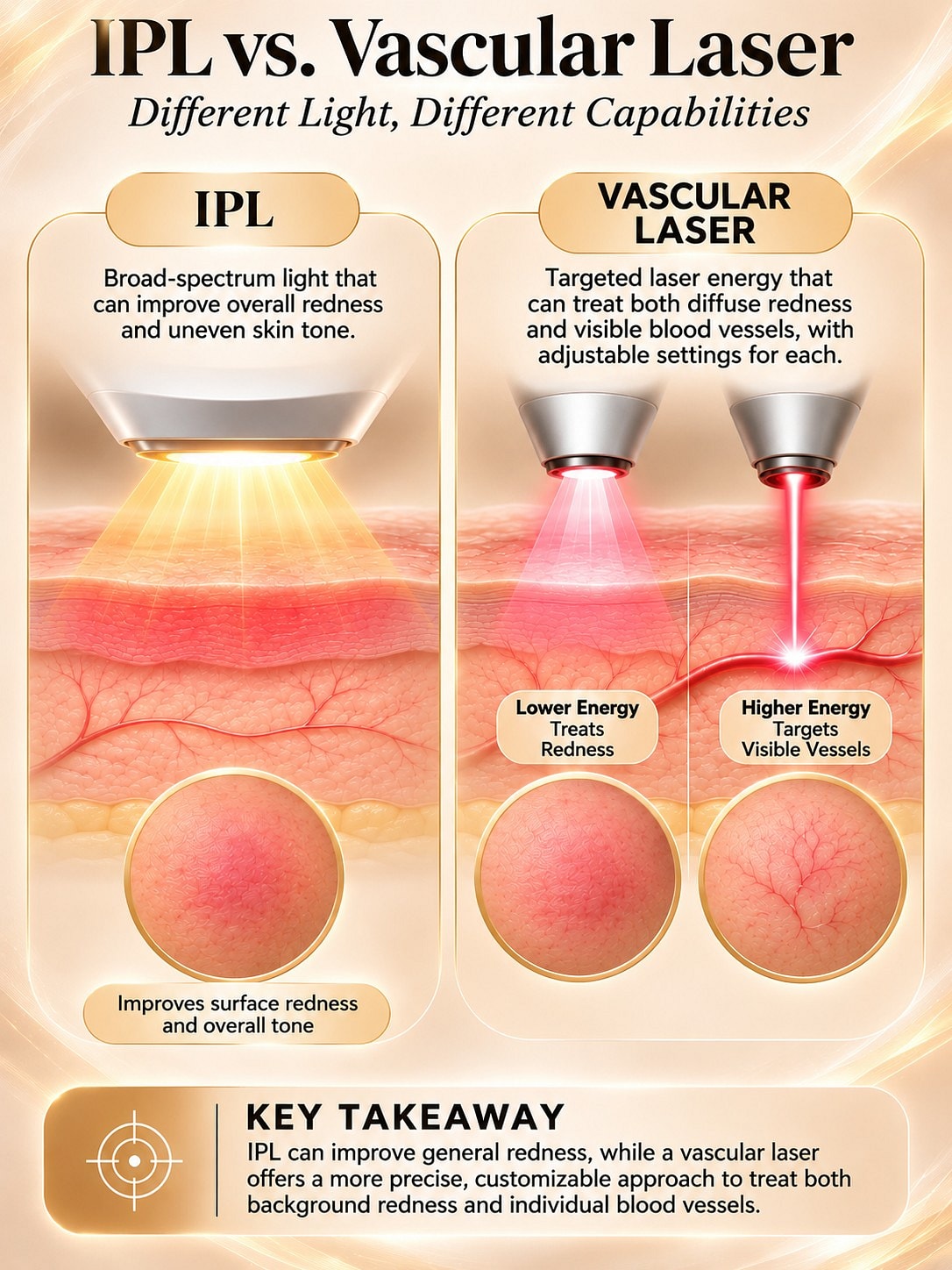
Many patients want a quick comparison of IPL and vascular lasers before diving into the details. While the right choice always comes from an in person consultation, it can be helpful to see typical patterns for redness, visible veins, and mixed discoloration. The cards below offer a concise overview of what each technology is usually best suited for, how many sessions are often needed, and how they differ in downtime and safety across skin tones.

Vascular lasers tend to be preferred for well-defined concerns such as visible facial veins, broken capillaries, spider veins, and moderate to severe rosacea with prominent vessels. IPL is often used for superficial redness and sun related discoloration in lighter skin tones when there is a mix of redness and brown spots. Post acne redness can respond to either approach. However vascular lasers with its increased precision can get more stubborn redness.
Both IPL and vascular laser treatments are usually performed as a series rather than a single session. IPL for diffuse redness and sun damage commonly requires several treatments spaced a few weeks apart. Vascular laser sessions for distinct vessels or angiomas may show visible change within a few visits, though chronic conditions like rosacea still need maintenance. Downtime is typically mild with temporary redness and swelling; some patients develop short lived darkening of spots or, in certain cases, light bruising where vessels were treated. In our experience vascular lasers with the right settings require less sessions and can get more stubborn reds than IPL allows.
Because IPL uses broad spectrum light, it is generally reserved for lighter skin types where the contrast between targets and surrounding skin is higher, which helps reduce the risk of pigment changes. Vascular lasers are more targeted to blood vessels and, with appropriate settings and cooling, can often be used across a broader range of skin tones. This precision is one reason a board-certified dermatologist will often favor a vascular laser for discrete vessels or more complex redness patterns, especially in a diverse community like Miami.
Rosacea is a chronic condition that often shows up as facial flushing, persistent redness on the cheeks, nose, and chin, and small visible vessels called telangiectasias. Some patients also have acne like bumps or eye symptoms. Chronic facial redness can also result from years of sun exposure without all the hallmarks of rosacea. Isolated broken capillaries and spider veins are focal vessels that may appear around the nose, on the cheeks, or on the legs. Post acne redness refers to persistent pink or red marks that remain after active breakouts have healed.
Both IPL and vascular lasers can improve these concerns, but they are not interchangeable. For moderate to severe rosacea with well defined vessels, a vascular laser is often preferred because it can be tuned to the size and depth of those vessels. IPL may be an option for mild redness and mixed sun damage in select lighter skin types. Isolated broken capillaries and spider veins usually respond best to a vascular laser, while post acne redness may be treated by either technology in lighter skin types. However, vascular lasers allow increased precison to target stubborn redness. In many cases, long term control comes from combining light-based treatments with medical therapy, skincare, and strict sun protection rather than relying on devices alone.
Effectiveness depends on using the right tool for the right indication and matching settings to your skin. Most patients need a series of IPL or vascular laser sessions to reach their initial goal. Treatments are spaced about 4 weeks apart, followed by occasional maintenance as needed.
Vascular laser treatments are directed at specific vessels, rosacea related telangiectasias, or angiomas may show more noticeable improvement even after the first few sessions, although ongoing redness control still takes time.
Vascular Laser: Mild Redness and Angioma Removal typically takes 1-2 Sessions. Stubborn redness typically takes 3-4 sessions for a significant improvement in redness based on our experience with our vascular laser.
IPL: Clinics that use IPL state it can be 3-4 sessions for regular redness and up to 6 sessions for stubborn redness.
Results appear gradually as treated vessels collapse and are reabsorbed and as inflammation in the skin settles down. Many patients see early changes within a few weeks, with full improvement from a series often becoming clear over several months. Because rosacea and sun damage are chronic processes, results are better described as long term control rather than a permanent cure. Triggers such as heat, alcohol, spicy foods, and intense sun exposure in Miami can still bring symptoms back if not managed. During your consultation, our team explains what kind of improvement is realistic for your pattern of redness and how long results may last with proper maintenance.
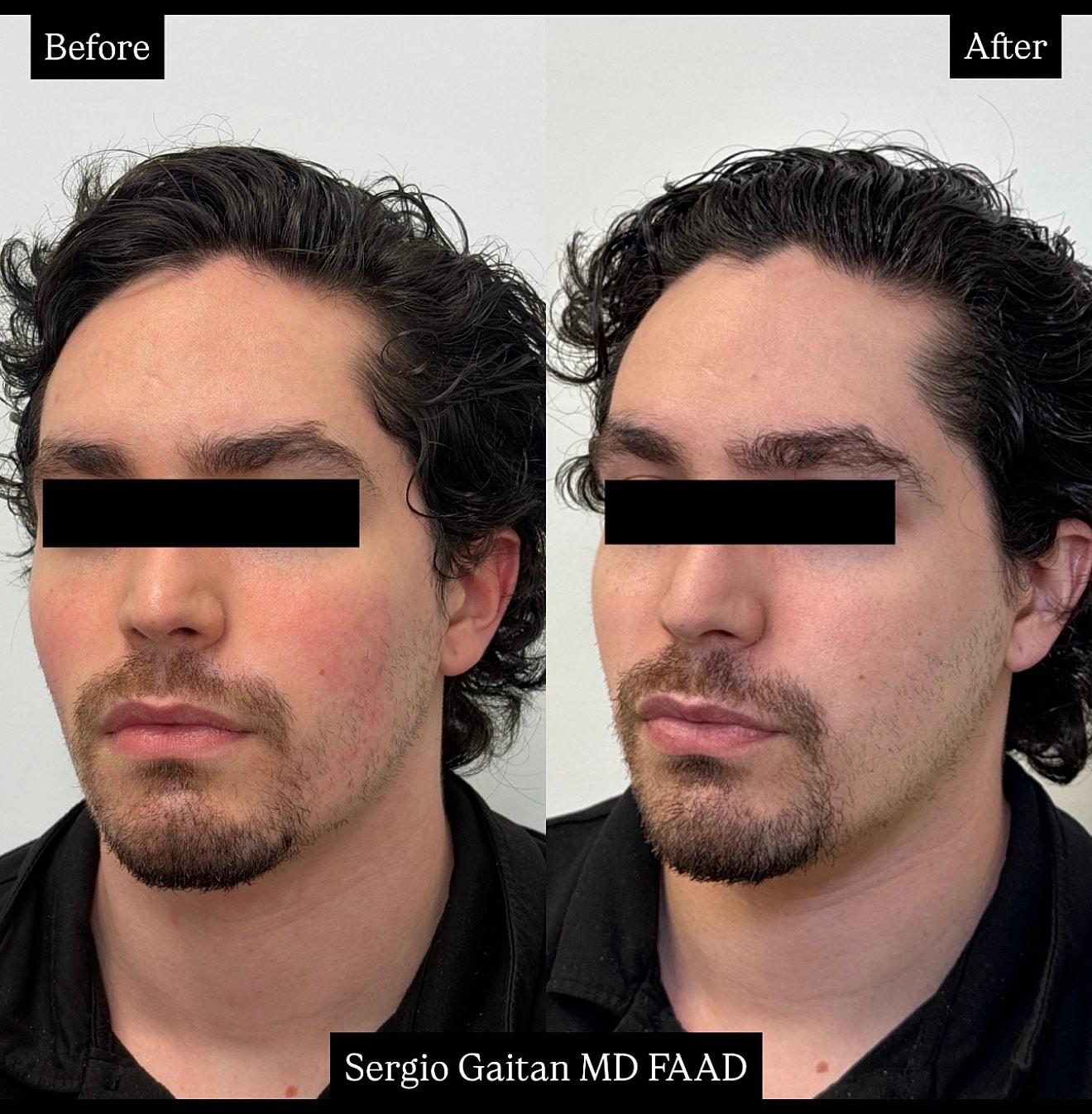
Any light based treatment has potential side effects, even when performed carefully. Common short term effects with both IPL and vascular lasers include temporary redness, mild swelling, and a warm or tight sensation in the treated areas. Brown spots can look darker for a few days before they flake or fade. Treated vessels can appear slightly more noticeable or bruised during the early healing phase. More significant risks include blistering, scabbing, changes in pigment, or scarring, which are uncommon when settings, cooling, and aftercare are appropriate.
Skin tone is a key safety factor. IPL is usually best suited for lighter complexions because the broad spectrum light can also be absorbed by melanin in the surrounding skin, increasing the risk of unwanted lightening or darkening in darker skin types. Vascular lasers, when paired with adequate cooling and conservative energy, may be used more flexibly across a wider range of tones because the wavelength is more selectively absorbed by blood in vessels. Certain patients are not candidates for either modality at a given time, including those who are pregnant, significantly tanned, taking photosensitizing medications, or dealing with uncontrolled medical conditions. In a sunny climate like Miami, strict sun protection before and after treatment is essential to minimize complications and preserve results.

Your visit starts with a detailed consultation. Our team reviews your medical history, medications, and any previous procedures. We examine the pattern of redness, flushing, and visible vessels, we take clinical photography to document baseline findings. Lifestyle factors such as work schedule, outdoor activities in Miami, skin care habits, and ability to avoid sun play an important role. Together, we discuss goals, available technologies, and which technology fits your concerns and safety profile.
On treatment day, your skin is cleansed and protective eyewear is placed. Test spots may be performed to confirm how your skin responds. During a vascular laser session, you may feel brief zaps and warmth as specific vessels are treated. Cooling spray is used to improve comfort and protect the surface of the skin with vascular laser. Afterward, the skin usually looks pink or slightly puffy, similar to a mild sunburn, and this typically settles over the next few hours to days. Home care focuses on gentle cleansing, fragrance free moisturizer, strict use of broad spectrum sunscreen, and avoiding hot yoga, saunas, intense workouts, and direct sun for a short period. You will receive clear instructions on what is normal and when to call the office.
Good candidates for IPL or vascular laser treatments are adults with persistent facial redness, visible vessels, or lingering redness after acne who are in overall good health and willing to protect their skin from the sun. Patients with lighter skin tones may have more flexibility to use IPL for mixed redness and pigment, while patients across a broader range of tones may be better suited to a properly selected vascular laser, especially when the main concern is discrete vessels. Realistic expectations are essential, particularly for chronic conditions like rosacea that require ongoing care rather than a single quick fix.
Some people are not ideal candidates at this time, such as those who cannot avoid tanning or sun exposure, have recently used isotretinoin, are pregnant or breastfeeding, or have certain medical issues that make light-based treatments unsafe. Others may need a different starting point, like topical medications, oral therapy, or adjustments in skincare before any device is used. At Certified Cosmetics we offer vascular laser for redness.
During your consultation, vascular laser is presented for redness. For those that want to enhance their experience they can ask about out Laser Memberships which offers combination laser treatments to address multiple concerns at once.
The key takeaway is that neither IPL nor a vascular laser is automatically the better choice for every case of redness or rosacea. The most effective and safest plan comes from an in-person evaluation with a physician who understands advanced laser physics, skin biology, and how to balance benefits with risk in a sunny, humid environment like Miami. At Certified Cosmetics, all cosmetic laser treatments are plans were developed by a board-certified dermatologist who focuses on laser enhanced skin rejuvenation.
Patients can choose stand alone treatment series or explore ongoing maintenance plans, including our laser memberships for those who want year-round access to our advanced technologies. If you are ready to address rosacea, facial redness, broken capillaries, or post acne redness, you can schedule a Personalized Aesthetic Assessment with Dr. Gaitan to review your concerns, understand every appropriate technology, and design a plan that fits your skin and your lifestyle.
For many patients with visible vessels and persistent redness from rosacea, a vascular laser is often preferred because it can be tuned specifically to the size and depth of the blood vessels driving the redness. IPL can help mild diffuse redness in lighter skin types, particularly when sun damage and brown spots are also present, but it is less targeted. The best option for you depends on your skin tone, severity, triggers, and any past treatments, which is why an in person consultation is important.
Patients with darker skin have a higher risk of pigment changes from IPL and it is not recommended. Because the broad-spectrum light can be absorbed by melanin in the surrounding skin and lead to complications. A vascular laser with appropriate wavelength selection, cooling, and conservative settings may be safer for certain redness and vessel concerns in these patients. Even then, careful testing, gradual dose escalation, and strict sun protection are essential. Our team will evaluate your skin type and history before recommending any light-based treatment.
Most patients describe both IPL and vascular laser sessions as tolerable but noticeable. IPL often feels like quick rubber band snaps with flashes of warmth. Vascular laser pulses can feel like brief stings or zaps along the vessel being treated. Cooling devices, cold air, or chilled gel packs are used to improve comfort and protect the skin surface. Treatments are usually quick, and any stinging sensation tends to fade soon after the session ends.
Pricing varies based on the technology used, the size of the area, the number of treatment sites, and how many sessions are recommended in your plan. Costs also differ when redness work is combined with other services such as resurfacing or pigment focused lasers. During your consultation, you will receive a customized treatment plan and a clear estimate before moving forward. General Pricing can be found on our pricing page.
Yes, many patients benefit from combining light based treatments with other modalities in a structured way. Examples include pairing vessel directed laser work with laser resurfacing, pico lasers, or maintenance treatments such as the Eve Facial. Prescription skincare, sun protection, and sometimes oral or topical medications for rosacea are also important. Our team will sequence treatments to support healing and reduce the risk of irritation.
Most patients can resume light daily activities immediately after IPL or vascular laser treatment, as long as they avoid intense heat, heavy workouts, and direct sun for a short period like 1-2 weeks. Makeup can often be applied the next day once the skin no longer feels very warm or tender, provided you use gentle, non irritating products. You will receive tailored instructions based on the intensity of your session, including when to resume full exercise and how to protect your skin while it recovers.
Certified Cosmetics is located in West Kendall.
Our World Class Laser Center provides Laser Treatment for the Face and Laser Resurfacing near Miami, Kendall, Coral Gables, South Miami, Pinecrest, Brickell, Midtown Miami, Coconut Grove, Doral, Design District, Aventura, Key Biscayne, Miami Beach